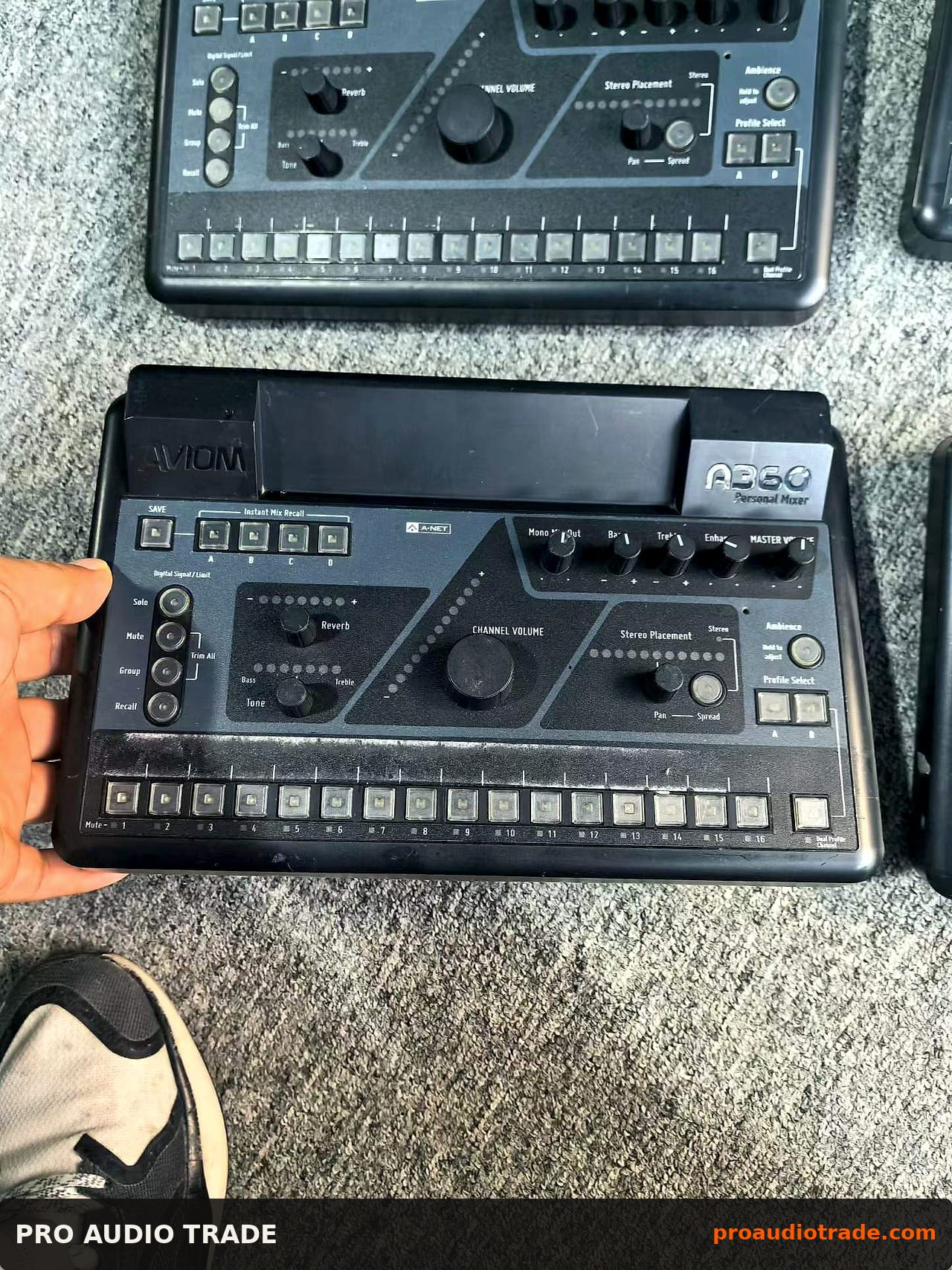
The Aviom A360 Personal Mixer is a staple in houses of worship, rental companies, and integration projects where flexible, user-controlled monitoring is needed without a full digital console at every position. Buying used can cut costs significantly, but the A360 has specific quirks and wear points that pros check before committing. This review covers where the A360 fits in a rental or venue inventory, the specs that matter for integration, a thorough used-buying checklist, price and total cost of ownership, and how B2B orders work on wholesale marketplaces.
Where the A360 fits in a rental or venue inventory
The A360 is a 16-channel personal mixer with A-Net output, designed for use with Aviom's Pro16 series or compatible systems. It shines in applications where musicians or presenters need to control their own mix without burdening the front-of-house engineer. Rental firms like it because it's rugged, relatively compact, and integrates easily with existing A-Net networks. Integrators specify it for churches, theaters, and corporate AV rooms where multiple mix positions are required but budget doesn't allow for a full console per user. In CIS, Middle East, South America, and Africa, the A360 is often found in fixed installations and touring racks, and used units are in demand because new stock can be expensive and lead times unpredictable.
Key specs that matter for integration work
The A360 offers 16 channels, each with level and pan, plus a master section with EQ and limiter. It uses A-Net over Cat-5e, which simplifies cabling and reduces cost. The unit has a headphone output and two line outputs, and it can be powered via PoE or an external supply. For integration, the critical points are compatibility with the A-Net protocol version, the availability of firmware updates, and the condition of the Cat-5 connectors. The A360 is often paired with the AN-16/i input module or a digital console with A-Net card. Pros check that the unit's firmware matches the rest of the system, because mismatched firmware can cause channel mapping issues or dropouts. Also, the A360 does not have a built-in talkback, so if that's needed, an external solution is required.
Used-buying checklist: what to inspect and what to ask
When evaluating a used A360, start with the physical condition: look for bent or broken Cat-5 connectors, cracked display, and worn encoder knobs. The encoders are a common failure point—they can become jumpy or unresponsive after heavy use. Test each channel's level and pan controls for smooth operation. Check the headphone and line outputs for noise or distortion. Ask the seller for a photo of the firmware version screen and confirm it's up to date. Request a test report showing all 16 channels passing signal, and ask if the unit has been used in a fixed install or on the road—road units may have more wear. Also inquire about the power supply: original Aviom PSUs are preferred, as third-party supplies can cause hum. Finally, ask for the serial number to check against any known issues or recalls.
Price context and total cost of ownership
Used A360 units typically sell for 40-60% of the new price, depending on condition and accessories. However, consider the total cost: you may need to replace worn encoders (a few dollars each but requires soldering), buy a compatible power supply if missing, and possibly update firmware. Freight costs for a single unit are modest, but for bulk orders, consolidate shipping. The A360 is generally reliable, but the most common failure points are the encoders, the Cat-5 jacks, and the display backlight. A tested unit with a warranty from a reputable dealer often justifies a higher price than a as-is unit from an unknown seller. For rental firms, downtime costs money, so buying tested stock with a return policy is smart.
How a B2B order works: grade, freight, MOQ
On wholesale marketplaces, used gear is typically graded: A (excellent), B (good), C (fair). For the A360, grade B units may have cosmetic scratches but function perfectly. MOQ can vary; some sellers require a minimum of 5-10 units, while others sell singles. Freight is usually arranged by the buyer or through the seller's logistics partner; for international shipments to CIS, Middle East, South America, and Africa, expect customs clearance and possible import duties. Always request a proforma invoice with Incoterms (e.g., FOB, CIF) and confirm the warranty terms. Payment is often via bank transfer or letter of credit for larger orders. Inspect the goods upon arrival and report any issues within the agreed window.
In summary, the used Aviom A360 is a solid investment for rental and integration projects if you buy wisely. Focus on encoder condition, firmware compatibility, and connector integrity, and prefer tested units with a warranty. With careful sourcing, you can add flexible personal mixing to your inventory at a fraction of the new cost.