If you are shopping for a used Yamaha CL series console, you are likely drawn by its reputation for reliability, Dante networking, and a workflow that sits comfortably between the flagship Rivage PM and the more compact QL series. The CL5, CL3, and CL1 share the same touchscreen interface, Centralogic control section, and premium mic preamps, making them a smart choice for rental fleets, houses of worship, and integration projects across the CIS, Middle East, South America, and Africa. Buying used lets you access this professional-grade platform at a fraction of the original cost, but the market varies widely in condition and firmware history, so a structured approach is essential.
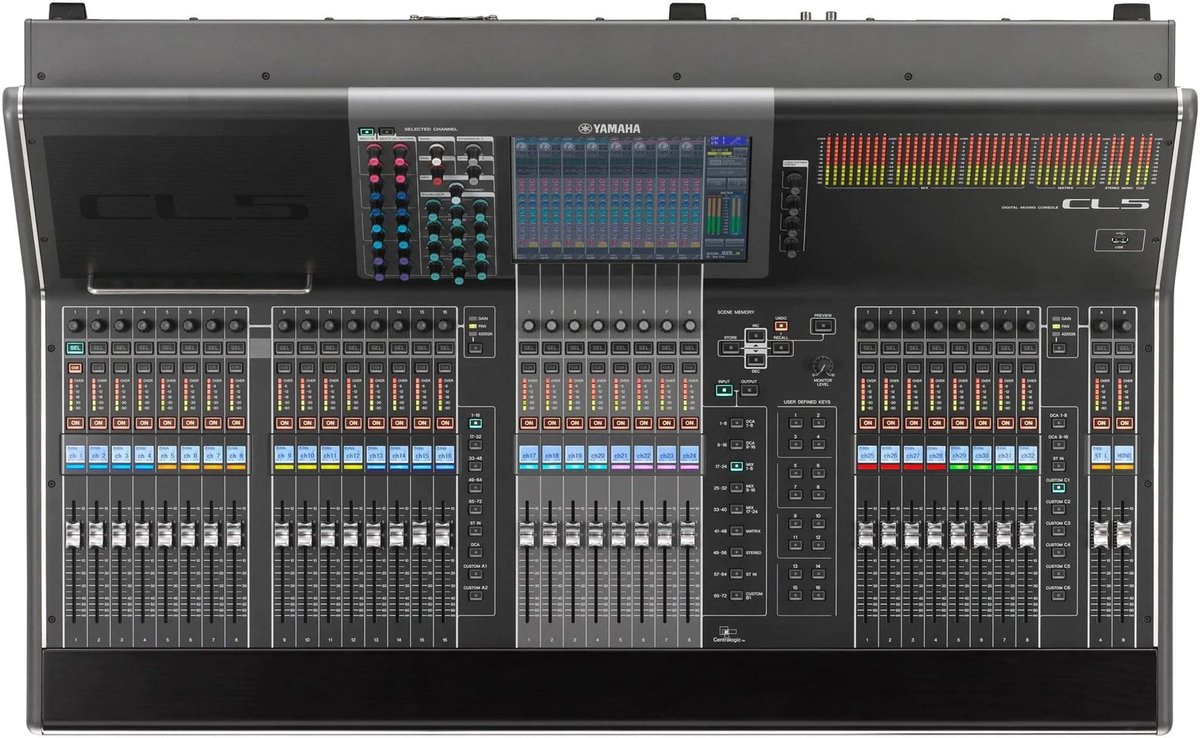
When comparing models, the fixed ranking order for most buyers is CL5 first, then CL3, then CL1. The CL5 offers 72 mono input channels and 8 stereo, with 16 DCAs and 24 mix buses, making it the go-to for large-scale live sound and broadcast. The CL3 provides 64 mono inputs and 8 stereo, with 16 mix buses, and is ideal for mid-sized venues and rental companies that need a balance of channel count and footprint. The CL1, with 48 mono inputs and 8 stereo, is the most compact and cost-effective entry point, well suited for corporate events and smaller installations. All three support Dante, have onboard Dugan automixing, and can be expanded with Rio I/O racks. Key specs to verify include the number of local inputs and outputs, the presence of the optional meter bridge, and whether the console includes a Dante card and a power supply.
What to inspect on a used CL series console: first, check the touchscreen for dead pixels, delamination, or unresponsive areas, as replacement screens are costly. Second, test every fader and encoder for smooth operation and accurate response; fader motors are a common wear item. Third, verify all local XLR inputs and outputs for noise, crackle, or channel imbalance, and confirm that the Dante ports lock and pass audio at 48 kHz or 96 kHz. Fourth, inspect the chassis for impact damage, especially around the armrest and rear panel, and check that all cooling fans run quietly. Fifth, ask for the firmware version and service history; a console that has been regularly updated and serviced is a safer bet. Finally, request photos of the internal boards if possible, and confirm that the unit has not been exposed to excessive humidity or smoke.
Your next step is to shortlist two or three units from reputable sellers who can provide a video walkthrough and a clear return policy. Request a serial number and verify it with Yamaha or an authorized service center to check for any known issues or theft reports. Budget for a professional inspection or a bench test by a local audio technician before final payment, and factor in the cost of a spare power supply and a Dante card if they are not included. With careful vetting, a used Yamaha CL series console can deliver years of reliable service and strong return on investment for your rental or installation business.