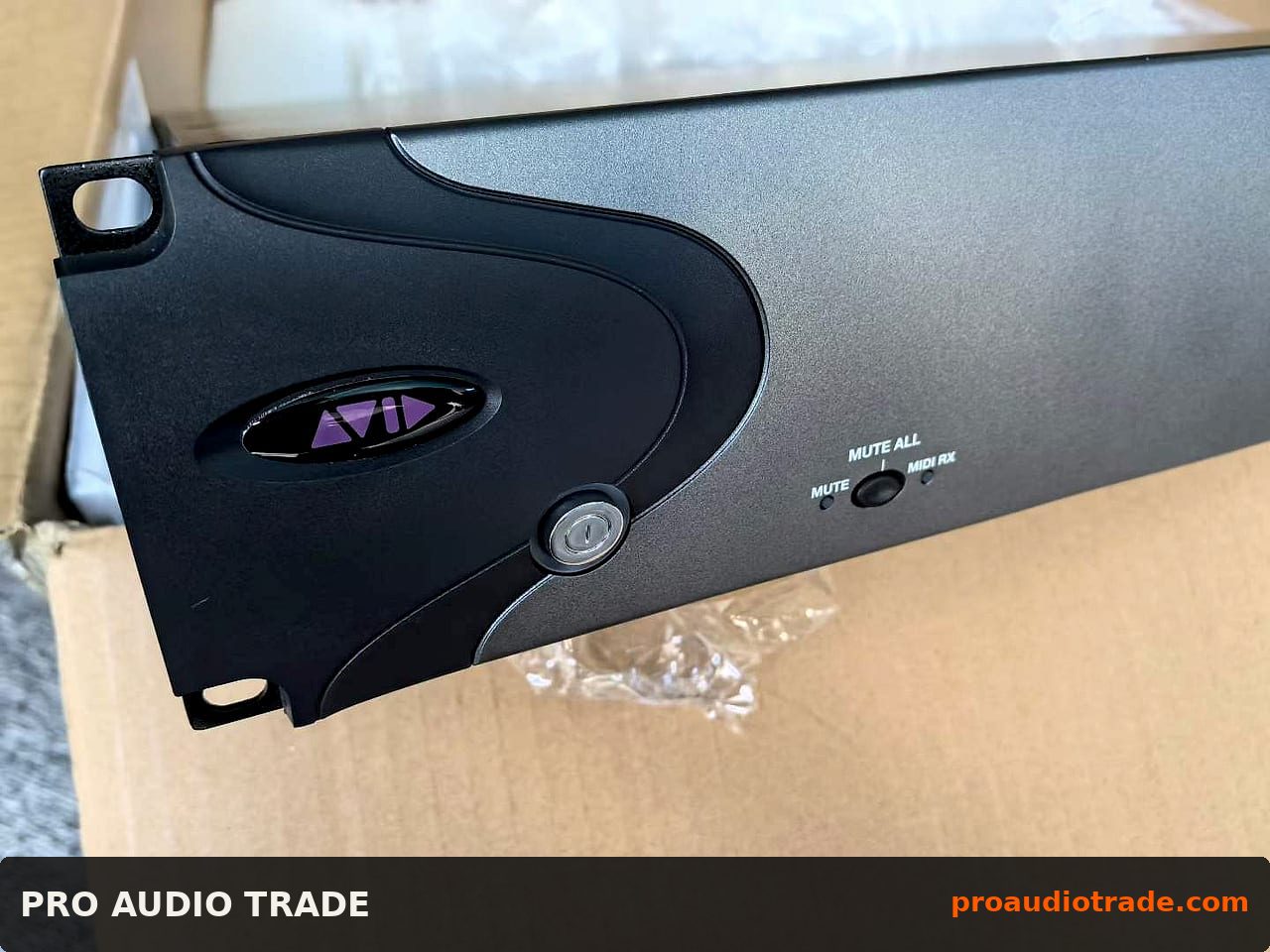
When you're specifying a monitor controller for a rental rack, a post-production suite, or a fixed install, the XMON Unit-37574 often surfaces in used listings alongside a handful of other compact, remote-ready units. This comparison is written for audio engineers, rental firms, and systems integrators who need to decide whether a tested used XMON Unit-37574 makes sense versus the usual alternatives—and what to check before you commit budget.
Where the XMON Unit-37574 fits in a rental or venue inventory
The XMON Unit-37574 is typically deployed as a remote monitor-control surface for consoles and DAWs where the operator needs talkback, cue switching, and monitor level control away from the main desk. In rental inventories it earns its place because it is compact, rugged enough for flightcase life, and familiar to freelance engineers who move between rooms. For integrators, it is a practical choice when the client wants a dedicated monitor section without rebuilding the console footprint. Compared with alternatives such as the SPL MTC series, Dangerous Music Monitor ST, or the Crane Song Avocet, the XMON Unit-37574 is less about audiophile monitoring and more about workflow: fast source selection, reliable talkback, and predictable behavior under show conditions. That positioning matters when you are buying used—you are not chasing the lowest noise floor, you are buying a tool that has to survive load-in, load-out, and a dozen different operators.
Key specs that matter for integration work
For integration, the specs that actually affect the install are connector types, remote-control protocol, power requirements, and physical depth. The XMON Unit-37574 is usually specified with balanced analog I/O on XLR or TRS, a remote link to the host unit, and a straightforward external PSU. Check that the unit you are buying includes the correct remote cable and PSU—these are the parts that go missing in rental fleets and are expensive to source separately. Latency and transparency are rarely the deciding factors at this price point; what matters is whether the talkback mic input has enough gain for the dynamic mics typically used in control rooms, and whether the monitor output can drive both nearfields and a sub without fuss. If you are integrating into a Dante or AES67 plant, the XMON Unit-37574 is an analog-domain device, so plan for conversion at the host console rather than expecting native network audio. That is a key difference versus newer alternatives that offer networked control.
Used-buying checklist: what to inspect and what to ask
On a used XMON Unit-37574, the usual failure points are the rotary encoders and pushbuttons, the talkback mic preamp, and the remote connector. Encoders wear from constant use and can become noisy or skip steps; ask the seller for a video of every encoder swept end to end. Pushbuttons should have a positive click and no double-triggering. The talkback preamp is often the first thing to go in rental stock—test it with a dynamic mic at normal speaking distance and confirm the gain is clean. Ask for the serial number and service history, and whether the unit has been recapped or had the PSU replaced. For alternatives like the SPL MTC or Dangerous Monitor ST, the same logic applies but the failure points differ: the SPL units are known for display and encoder issues, while the Dangerous units are generally robust but heavier and more expensive to ship. Always request photos of the rear panel, the PSU label, and the remote cable ends. A tested used unit from a B2B marketplace should come with a grading report and a functional test sheet—if the seller cannot provide that, treat the price as a project unit.
Price context and total cost of ownership
Used XMON Unit-37574 pricing sits in the mid-range for monitor controllers: cheaper than a used Avocet or Monitor ST, more expensive than basic passive switchers. The total cost of ownership depends heavily on whether the remote cable and PSU are included; sourcing a replacement remote cable can add a meaningful percentage to the purchase price. Factor in freight: these units are small but heavy enough that courier costs matter for cross-border shipments to CIS, Middle East, South America, and Africa. A tested, graded unit with accessories is usually the better value than a cheaper untested unit, because the labor cost of troubleshooting a faulty talkback circuit exceeds the price difference. For rental firms, the payback is fast if the unit goes out on multiple shows per month; for integrators, the value is in avoiding a return visit to site.
How a B2B order works: grade, freight, MOQ
On a B2B wholesale marketplace, used XMON Unit-37574 stock is typically graded (A, B, C) with a functional test report. Grade A means cosmetic wear is minimal and all functions test clean; Grade B may have rack rash or a replaced knob but is fully operational; Grade C is functional but cosmetically rough—fine for rental stock that lives in a case. MOQ is usually one unit, but mixed pallets with other monitor controllers can reduce freight per unit. Ask about consolidation: if you are ordering for a rental fleet, combining several units into one shipment to a CIS or Middle East hub cuts per-unit freight significantly. Confirm the Incoterms and whether the seller handles export documentation; for South America and Africa, customs clearance can add weeks, so plan spares accordingly. A reputable seller will provide test videos, grading photos, and a packing list before you pay.
A tested used XMON Unit-37574 is a sensible buy when you need a familiar, rugged monitor controller with predictable behavior and you can verify the remote cable and PSU are included. If you need networked control or audiophile-grade transparency, budget for the alternatives instead—but for rental racks and integration projects where workflow beats specs, the used XMON Unit-37574 remains a practical, cost-effective choice.