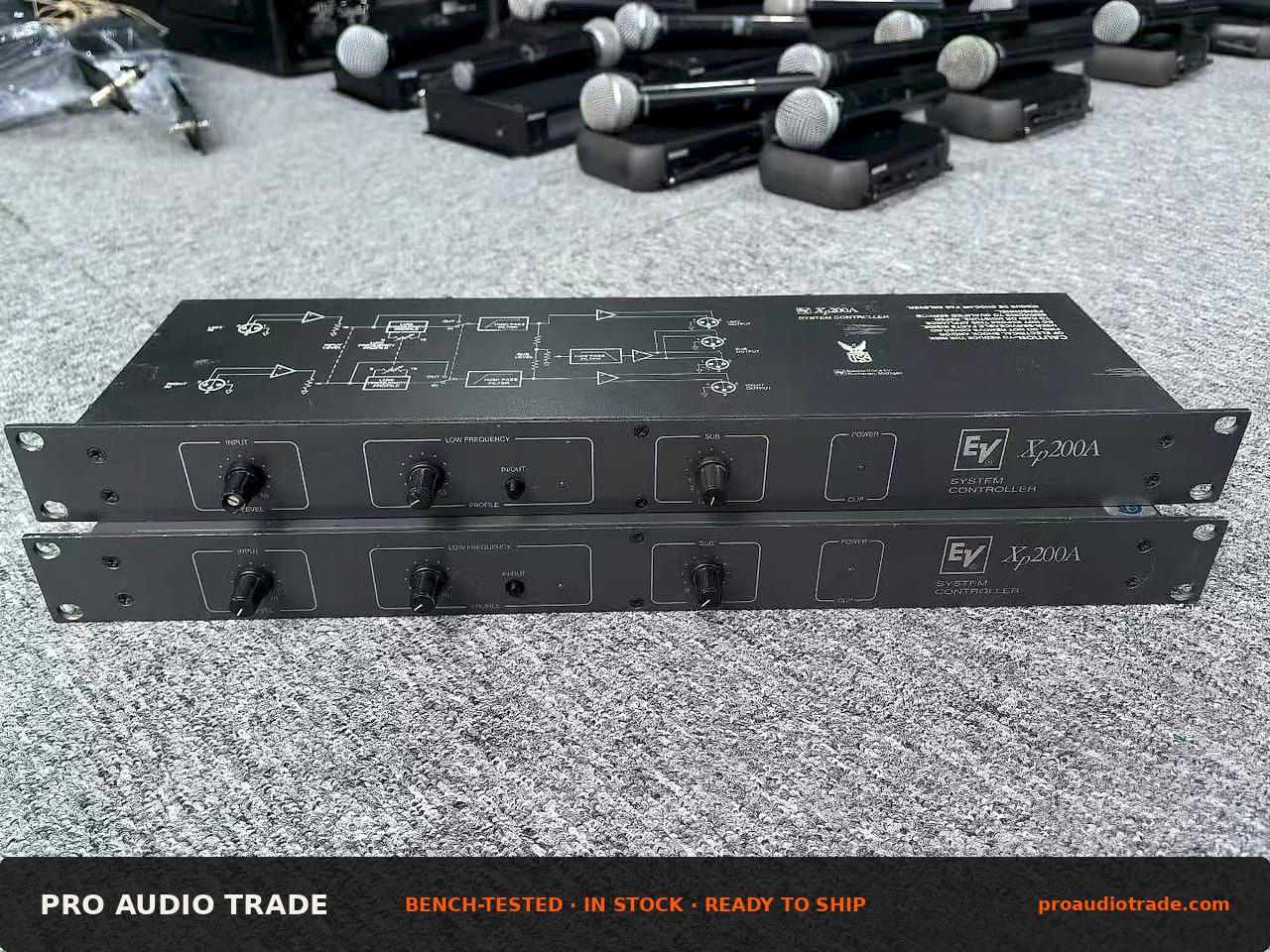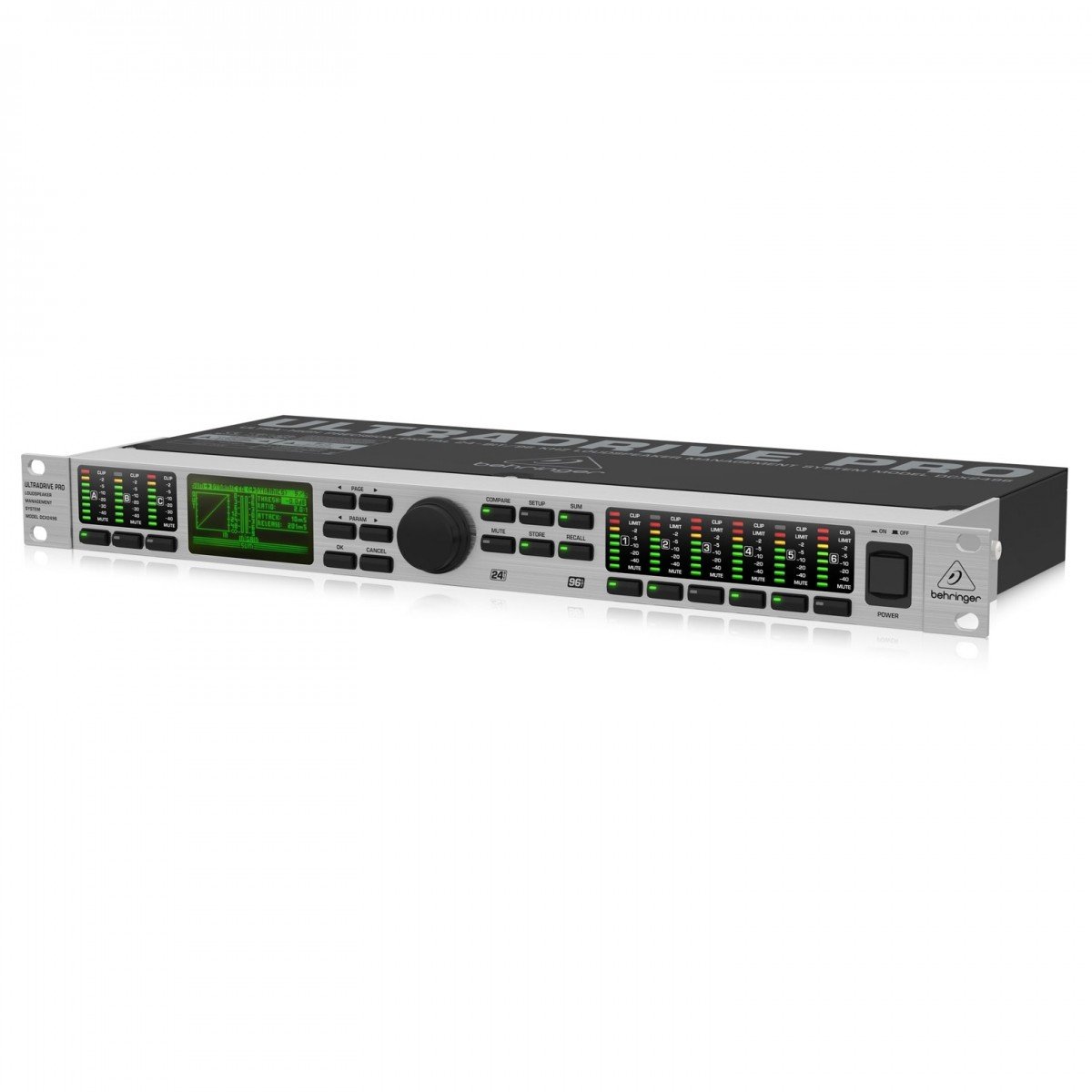
When you're sourcing a used loudspeaker management system for rental fleets, installs, or touring racks, the Behringer DCX2496 is often the first name that comes up. It's a 3-in/6-out digital crossover and processor with 24-bit/96 kHz converters, parametric EQ, delays, limiters, and preset memory — all in a single rack space. For buyers in CIS, Middle East, South America, and Africa, the DCX2496's appeal is obvious: it delivers a lot of DSP for very little money on the secondary market. But before you commit a batch of units to your inventory, it's worth comparing it against the alternatives that show up in the same used-price bracket. This guide breaks down the real-world trade-offs so you can buy with confidence.
Key specs and comparison ranking. The DCX2496 offers 3 analog inputs, 6 analog outputs, 24-bit/96 kHz processing, and a familiar front-panel interface with rotary encoder. In fixed order of what most buyers prioritize for used gear: (1) Behringer DCX2496 — best value per channel, widely available, easy to find spares and community presets; (2) dbx DriveRack PA2 — more polished limiters and AutoEQ wizard, but typically 30–50% more expensive used and less common in bulk lots; (3) BSS BLU-100 or Soundweb London series — pro-grade networking and reliability, but far higher cost and steeper learning curve; (4) Xilica XP-series — strong DSP and good build, though service network is thinner in some regions; (5) Ashly Protea or ne24.24M — solid analog-style workflow, but older units may lack USB and modern preset management. For most rental and integration buyers, the DCX2496 wins on availability and price-to-performance, while the DriveRack PA2 is the step-up pick when budget allows.
What to inspect on a used unit. The DCX2496 has known wear points: the rotary encoder can become jumpy, the LCD backlight may dim, and the internal power supply capacitors are aging on early production runs. Ask for photos of the rear panel to check for bent XLR pins or missing screws, and request a short video showing boot-up, preset recall, and output metering on all six channels. Confirm firmware version and whether the unit has the latest EPROM — older firmware lacks some preset features. On alternatives, check the DriveRack PA2 for a working USB port and the BSS units for network card health. Always verify that the seller includes the power cable and, where applicable, the rack ears.
Next step for wholesale buyers. If you're buying in volume, request a lot-level test report: each unit powered on, factory reset, and a signal passed through all inputs and outputs. For the DCX2496 specifically, ask the seller to confirm encoder response and LCD visibility, since these are the most common return reasons. Compare landed cost including shipping and any import duties to your region — a slightly higher-priced DriveRack PA2 with a clean history can be the better long-term buy for integrators who need reliable limiters. Set a target price per unit based on recent sold listings, and negotiate lot pricing for mixed batches. With the right inspection checklist, the DCX2496 remains one of the safest used DSP purchases for B2B resale and deployment.