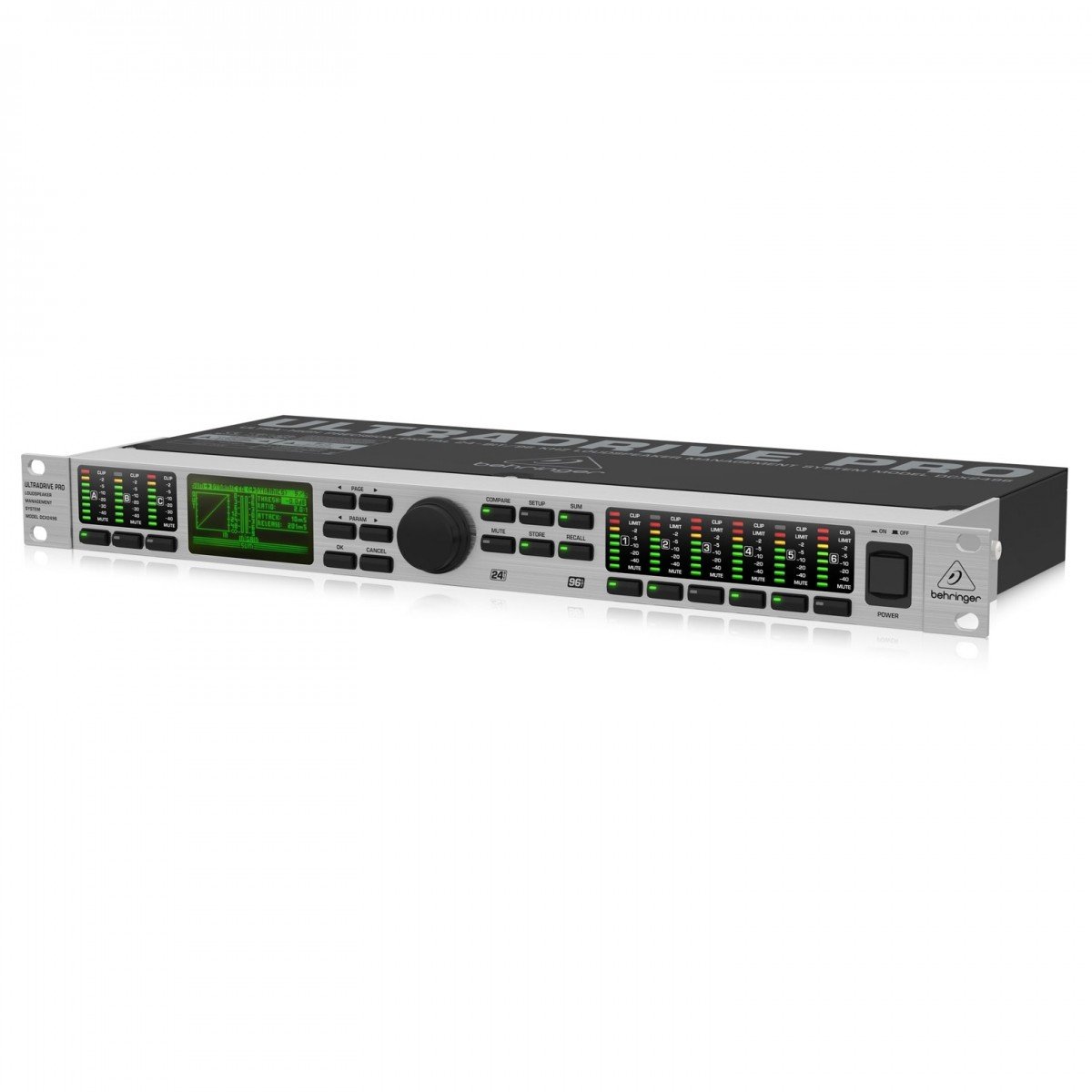
If you are searching for a used Behringer DCX2496 for sale, you are likely looking for an affordable, flexible loudspeaker management system that can handle crossover, EQ, delay, and limiting duties without breaking the budget. The DCX2496 (also known as the Ultradrive Pro) is a 3-in/6-out digital processor that has been a staple in rental inventories, small installs, and mobile rigs for years. Its appeal is simple: three analog inputs, six analog outputs, 24-bit/96 kHz converters, and a full suite of processing tools in a single 1U rack unit. For engineers in CIS, the Middle East, South America, and Africa, where access to premium brands can be costly, a used DCX2496 often represents the most practical way to get reliable system control.
Key specs and comparison: The DCX2496 offers 3 analog inputs (XLR) and 6 analog outputs (XLR), with optional AES/EBU digital input. Each output channel includes parametric EQ, graphic EQ, delay, limiter, and crossover filters (Butterworth, Bessel, Linkwitz-Riley) with slopes up to 48 dB/oct. Compared to its common alternatives, the DBX DriveRack PA2 has a more intuitive interface but fewer outputs (only 6 with 2 inputs), while the Behringer DCX2496 gives you an extra input for flexible routing (e.g., mono sub + stereo mains). The Ashly Protea 3.6SP is more robust but typically costs significantly more on the used market. In a fixed ranking of value-for-money used processors, the DCX2496 consistently ranks near the top for budget-conscious buyers who need 3-in/6-out capability. However, note that early units had known issues with the power supply and display, so condition matters more than age.
What to inspect before buying: First, check the display and encoder knob—these are common failure points on older units. Ask the seller for a photo of the LCD powered on and confirm that the knob responds smoothly without skipping. Second, verify all six outputs and three inputs work by requesting a test report or a short video showing signal passing through each channel. Third, inspect the rear panel for bent XLR pins or damaged connectors, and confirm the unit includes the original power cable (IEC). Fourth, ask about firmware version—later firmware (v1.3 or higher) fixes some bugs and is preferable. Finally, consider the unit's history: units from rental fleets may have cosmetic wear but are often well-maintained, while studio units may be cleaner but less tested under load. If possible, buy from a seller who offers a return policy or a short warranty.
Next step: Once you have identified a candidate, request a detailed photo set (front, rear, display on, internal fan area) and a short functional video. Confirm the asking price against recent sold listings—used DCX2496 units typically range from $150 to $300 depending on condition and accessories. For buyers in CIS, Middle East, South America, and Africa, factor in shipping and customs, and prefer sellers who can provide proper export documentation. If the unit passes inspection, the DCX2496 remains a solid, cost-effective choice for system processing in clubs, houses of worship, and mobile rigs. Always test it thoroughly upon arrival and keep a backup preset file.