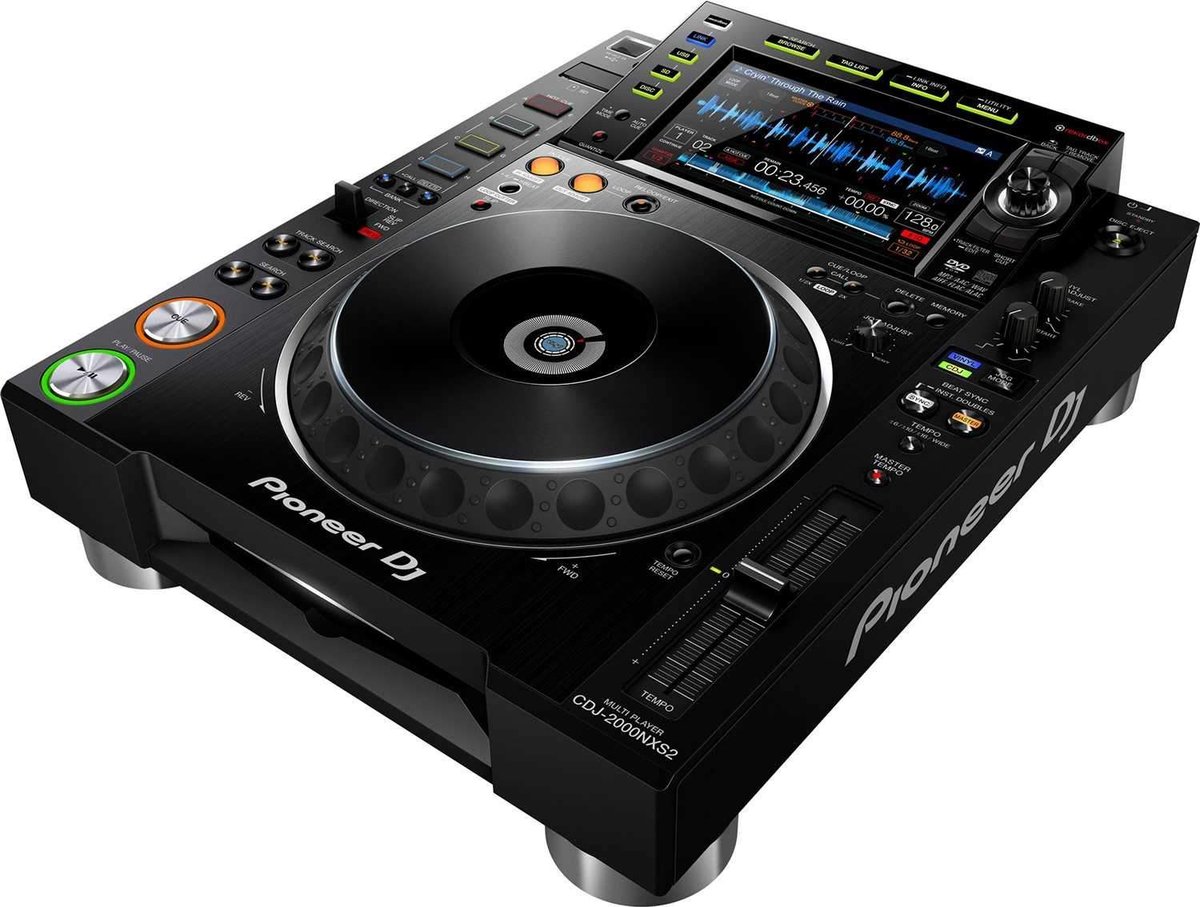
The Pioneer DJ CDJ-2000NXS2 remains the de facto rider standard in clubs, festivals, and rental inventories worldwide, even with newer flagships on the market. For B2B buyers sourcing used stock, it offers a rare combination: proven reliability, deep integration with rekordbox and Pro DJ Link, and strong residual value. This review covers what matters when evaluating a used unit for professional deployment—from failure points to freight and grading—so you can buy with confidence.
Where the CDJ-2000NXS2 fits in rental and venue inventories
The NXS2 is the workhorse of the CDJ line. Its 9-inch capacitive touchscreen, 4-channel Pro DJ Link networking, and support for rekordbox export and link export make it a safe bet for any booth that needs to accommodate touring DJs. Rental firms value it because it is the most requested player in the rider, and venues like it because it is familiar to guest engineers and reduces setup friction. Integrators appreciate the standard IEC power, balanced XLR outputs, and digital coax out, which simplify permanent installs. In short, if you are building or refreshing a professional booth, the NXS2 is the lowest-risk choice for compatibility and rider acceptance.
Key specs that matter for integration work
The NXS2 offers 24-bit/96 kHz audio processing, a 9-inch touchscreen with waveform and rekordbox library navigation, and four-deck Pro DJ Link over Ethernet. It has XLR balanced outputs, RCA unbalanced, and coaxial digital output, plus a 3.5 mm mini-jack for booth monitoring. The unit supports USB storage (up to 32 GB per slot, two slots), SD card, and link export from a laptop running rekordbox. For integration, note the IEC power inlet (100–240 V), the 6.3 mm headphone jack, and the LAN port for linking multiple players. The player also supports DJS-1000 and DJM mixers via Pro DJ Link, and can act as a controller for rekordbox dj with a license. These specs make it flexible for both rental and fixed installations.
Used-buying checklist: what to inspect and what to ask
Start with the physical condition: check the jog wheel for wobble or resistance, test the touchscreen for dead spots or delamination, and inspect the cue/play buttons for double-triggering. The most common failure points on the NXS2 are the jog wheel assembly (dirt or worn bearings cause drift), the USB ports (loose or broken solder joints), and the display (backlight flicker or touch unresponsiveness). Ask the seller for a test report covering: power-on self-test, USB and SD card read/write, Pro DJ Link communication with another player, audio output on all channels, and headphone output. Request photos of the rear panel, serial number, and any service history. For B2B orders, confirm that the unit has been tested with rekordbox and that firmware is up to date. Also ask about the condition of the power cable and whether the unit includes a dust cover or flight case.
Price context and total cost of ownership
Used CDJ-2000NXS2 prices vary by region and condition, but expect to pay roughly 60–75% of the new street price for a tested unit in good cosmetic condition. Factors that affect price include the presence of original packaging, service history, and whether the unit has been used in a fixed install (usually less wear) versus touring (more wear). Total cost of ownership includes potential replacement of the jog wheel assembly (a common wear item), USB port repairs, and periodic cleaning. Budget for a spare set of RCA cables and a backup power cable. Compared to newer models, the NXS2 has a lower entry cost and a mature repair ecosystem, which makes it attractive for rental fleets that need to scale without overspending. Keep in mind that shipping and import duties can add 10–20% depending on destination.
How a B2B order works: grade, freight, and MOQ
Most B2B sellers grade used gear as A (excellent, minor cosmetic wear), B (good, visible wear but fully functional), or C (fair, heavy wear or minor faults). For rental use, grade B is often the sweet spot: it saves money and still delivers reliable performance. Ask for a functional test report and a photo set for each unit. MOQ varies: some sellers require a minimum of 2–4 units, while others allow single-unit orders. Freight for a CDJ is typically via air or sea courier; each unit weighs about 5.5 kg and ships in a box of roughly 50×40×20 cm. For CIS, Middle East, South America, and Africa, confirm that the seller can provide commercial invoices and that the voltage (100–240 V) matches your region. Sea freight is cheaper for bulk orders but adds transit time; air freight is faster for urgent needs. Always clarify warranty terms—typically 30–90 days on used gear—and return policy.
A used CDJ-2000NXS2 is a smart buy for B2B buyers who need rider-friendly, reliable players without the new-unit price. Focus on tested stock with a clear grade, ask for functional reports, and factor in freight and potential wear items. With the right due diligence, these units will serve your rental fleet or venue for years.