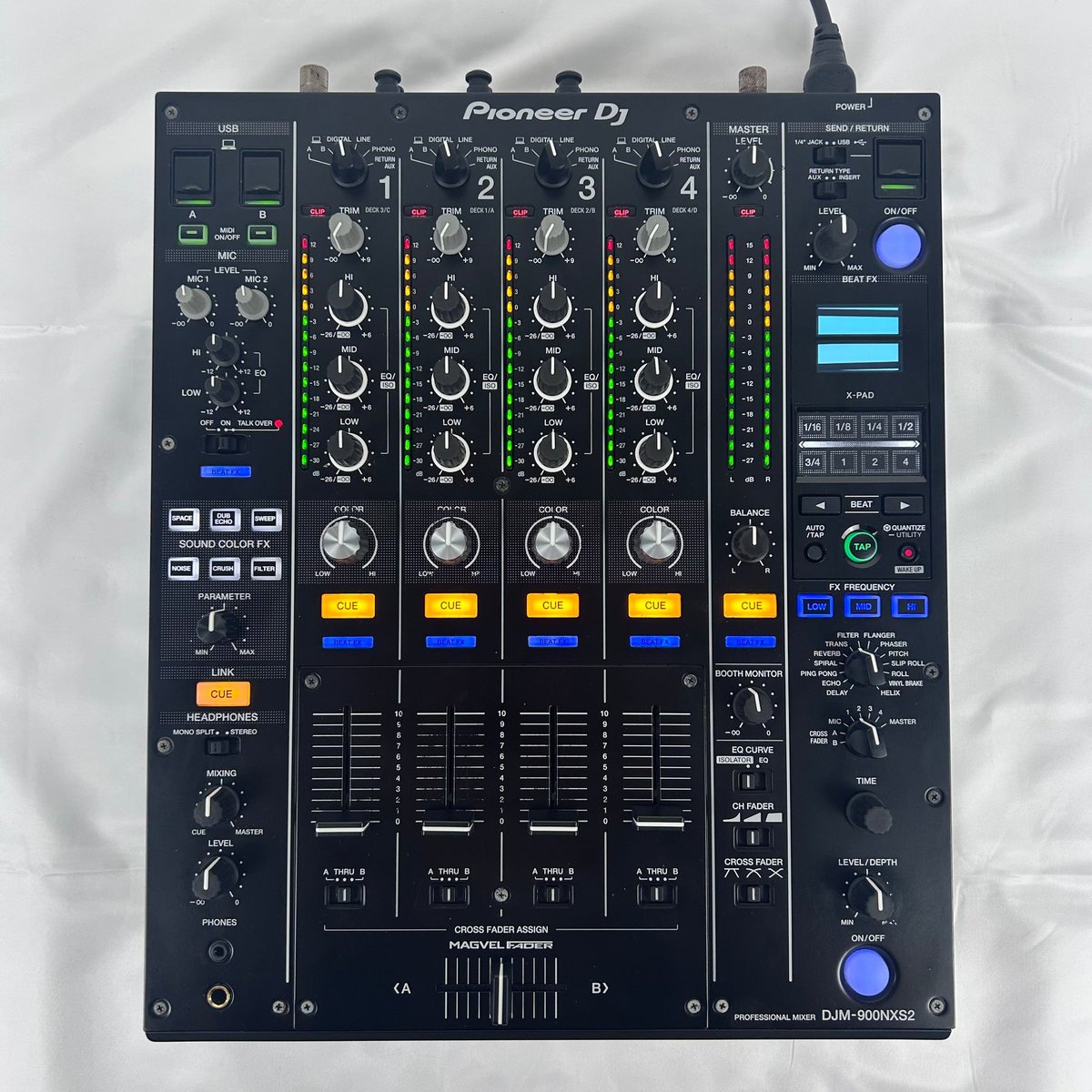
The Pioneer DJ DJM-900NXS2 is the de facto standard club mixer, but for rental firms, integrators, and audio engineers sourcing used gear, it is not always the smartest buy. This comparison weighs the DJM-900NXS2 against credible alternatives—Allen & Heath Xone:96, Denon DJ X1850 Prime, and the older DJM-900NXS—focusing on integration, reliability, and total cost of ownership for B2B buyers in CIS, the Middle East, South America, and Africa.
Where the DJM-900NXS2 fits in a rental or venue inventory
The DJM-900NXS2 is the rider-friendly choice. Its layout, effects, and Pro DJ Link ecosystem are familiar to touring DJs, so it reduces setup friction and client complaints. For rental companies, that familiarity translates to fewer support calls and faster turnarounds. However, the mixer’s premium also means higher insurance value and replacement cost. In venues where riders specify Pioneer DJ, the NXS2 is often non-negotiable; in multipurpose rooms or installs where the mixer is shared with AV playback, the Xone:96 or Denon X1850 can offer better value. The NXS2’s dual USB ports and four phono/line inputs make it flexible for back-to-back sets and quick changeovers, but its digital-heavy architecture means you need to plan for firmware and driver compatibility.
Key specs that matter for integration work
For integrators, the critical specs are I/O, digital connectivity, and power. The DJM-900NXS2 offers four phono/line inputs, two USB soundcards, coaxial S/PDIF, and a 32-bit/96kHz internal DSP. The Xone:96 counters with four phono/line inputs, two USB ports, and a dual 32-bit/96kHz soundcard, plus a more analog signal path that some engineers prefer for warmth. The Denon X1850 Prime adds four phono/line inputs, two USB ports, and built-in Wi-Fi for wireless streaming, but its effects and layout are less rider-standard. The older DJM-900NXS lacks the NXS2’s dual USB and improved soundcard, but it remains a workhorse with a lower entry price. For installs, consider the mixer’s height and rack-mount options; the NXS2 is 4U rack-mountable with an optional kit, while the Xone:96 is also rack-mountable. Power consumption and heat output matter in tight booths—the NXS2 runs warm but is generally stable with adequate ventilation.
Used-buying checklist: what to inspect and what to ask
On a used DJM-900NXS2, check the faders first: the crossfader and line faders wear out, and replacement parts are available but labor-intensive. Test every channel’s phono/line switch, gain, and EQ for scratchy pots. Inspect the USB ports for loose connections and test both soundcards with a laptop. Verify the effects section—delay, echo, and spiral—for glitchy behavior. Ask the seller for a service history, firmware version, and whether the unit has been in a smoke-heavy environment. For the Xone:96, check the filter section and VCA faders; for the Denon X1850, test the Wi-Fi module and screen. Always request photos of the rear panel and serial number, and ask for a video of the unit powering on and passing audio on all channels. For B2B orders, insist on a testing report and a DOA (dead-on-arrival) policy.
Price context and total cost of ownership
Used DJM-900NXS2 prices vary by region and condition, but expect a premium over the Xone:96 and a significant premium over the original NXS. The NXS2 holds value well, which is good for resale but bad for initial outlay. Factor in the cost of a rack-mount kit, replacement faders, and a spare power cable. The Xone:96 may need less frequent fader replacement but has a different feel that some DJs resist. The Denon X1850 is often the cheapest of the three used, but its resale value is lower and rider acceptance is weaker. For rental fleets, the NXS2’s higher upfront cost is offset by higher utilization and rental rates. For installs, the Xone:96’s analog path and filter may reduce long-term maintenance. Always calculate total cost including freight, customs, and a 10–15% buffer for refurbishment.
How a B2B order works: grade, freight, and MOQ
B2B used-gear orders typically follow a grading system: A (excellent, minor cosmetic wear), B (good, functional with visible wear), C (fair, working but cosmetically rough). Ask for the specific grade and what it means for the seller. MOQ varies—some sellers require 5–10 units for wholesale pricing, while others allow single-unit purchases at a higher price. Freight to CIS, the Middle East, South America, and Africa can be significant; sea freight is cheaper for bulk but slower, while air freight suits urgent orders. Ensure the seller provides export documentation, and confirm voltage compatibility (the NXS2 has a universal power supply, but check the plug type). For high-value items, consider insurance and a pre-shipment inspection. A reputable B2B seller will offer a warranty (typically 30–90 days) and a returns policy for DOA units.
In summary, the DJM-900NXS2 remains the safest rider-friendly choice, but the Xone:96 and Denon X1850 offer compelling alternatives for budget-conscious buyers who can accept a different workflow. For B2B buyers, the key is to balance rider acceptance against total cost of ownership, and to insist on tested stock with clear grading and warranty terms.