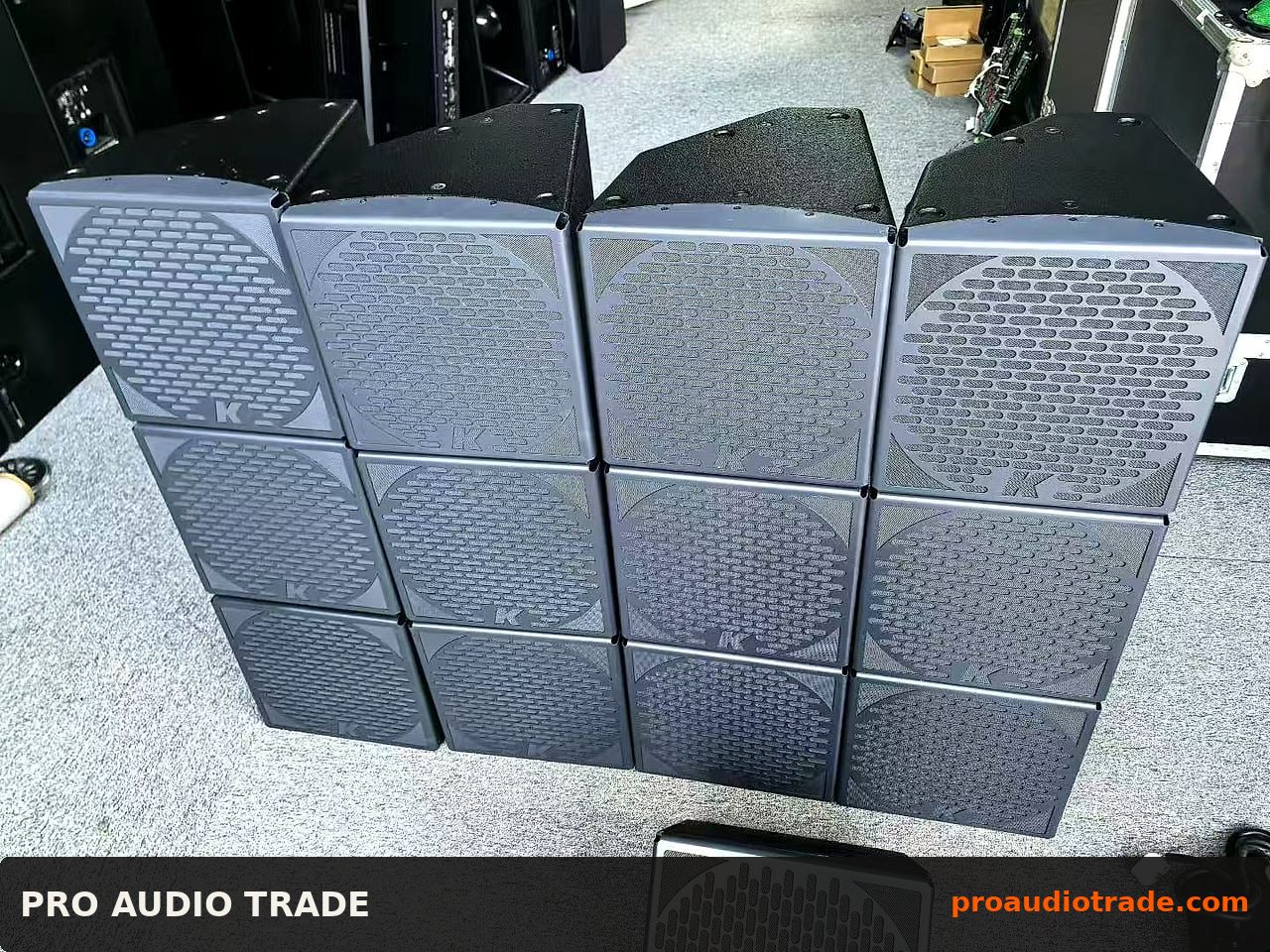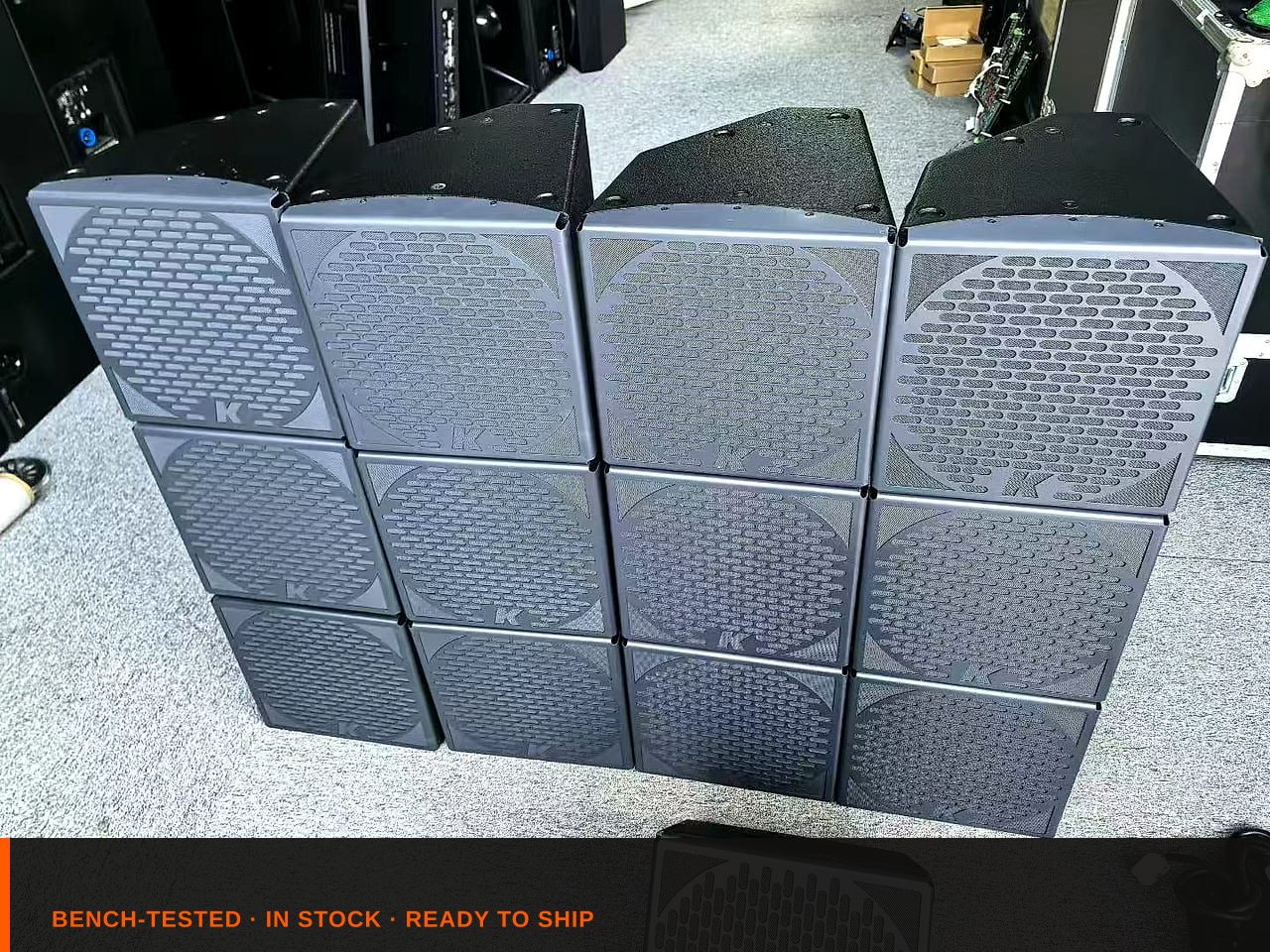
The K-array KF12 is a compact, high-output two-way loudspeaker that has earned a solid reputation in rental inventories and fixed installations where space is tight but SPL demands are real. For B2B buyers sourcing used stock, it represents a smart balance of Italian design, rider acceptability, and cost efficiency—if you know what to inspect and what to ask. This review cuts through the marketing and gives you the field-level detail you need before committing to a wholesale order.
Where the KF12 fits in a rental or venue inventory
The KF12 is a 12-inch two-way passive loudspeaker designed for both portable and installed use. In rental fleets, it typically serves as a front-fill, delay, or small main PA for corporate events, conference rooms, and intimate live stages. Its coaxial driver arrangement (a 12" woofer with a 1.4" compression driver mounted coaxially) gives it a predictable dispersion pattern and a form factor that disappears visually in architectural spaces. Integrators like it for houses of worship, museums, and boardrooms where the client wants hi-fi clarity without bulky boxes. Because it is passive, it pairs with a range of amplifiers, giving rental firms flexibility in rack design. The KF12 is not a rock-concert box—it is a precision tool for speech and light music at moderate distances. That said, its 128 dB peak SPL and 8-ohm impedance make it surprisingly capable for its size, and it arrays well with other K-array elements when you need wider coverage.
Key specs that matter for integration work
The KF12's coaxial design is its headline feature: a 12-inch neodymium woofer and a 1.4-inch compression driver share a single magnet assembly, which keeps the cabinet shallow and the phase response coherent. Frequency response is rated 55 Hz – 20 kHz (-6 dB), with a nominal coverage of 90° horizontal by 60° vertical—a pattern that works well for both short-throw mains and fills. Power handling is 400 W AES (800 W peak) at 8 ohms, and the peak SPL is 128 dB. The cabinet is plywood with a polyurea coating, and it ships with a pole mount and rigging points. For integration, the passive crossover is simple and robust, and the Speakon NL4 connectors are standard. One detail pros check: the KF12 is available in both black and white finishes, and the white version is often preferred for architectural installs. Also note that K-array offers dedicated presets for its own amplifiers, but the speaker works fine with third-party DSP if you know the crossover points. The 90° x 60° pattern means you can use it as a down-fill under a larger line array or as a standalone delay—just be aware that the coaxial source can exhibit slight HF beaming if you push it hard off-axis.
Used-buying checklist: what to inspect and what to ask
When evaluating used KF12 units, start with the drivers. The coaxial compression driver is the most sensitive component—listen for distortion at high frequencies and check for any signs of diaphragm fatigue. The woofer surround should be supple, not cracked or stiff; neodymium magnets can lose strength if overheated, so ask about prior use in high-SPL environments. Inspect the cabinet for deep gouges, water damage, or swollen plywood, especially around the pole mount and rigging points—these are stress areas. The polyurea coating hides small scratches well, but bubbling indicates moisture ingress. Check the Speakon connectors for loose pins or corrosion; these are cheap to replace but a sign of neglect. Ask the seller for a test sweep or impedance curve for each unit—a simple woofer and tweeter sweep will reveal voice coil rubbing or crossover issues. Also request the serial numbers and confirm they are not from a known problematic batch. For B2B orders, ask about the grading system: A-stock (fully tested, minor cosmetic wear), B-stock (functional with visible scratches), and C-stock (for parts or repair). Reputable sellers will provide photos of the actual units, not stock images, and will offer a short warranty (30–90 days) on tested stock. Finally, confirm that the grilles and any rigging hardware are included—missing accessories can add up quickly.
Price context and total cost of ownership
Used KF12 pricing varies by region and condition, but as a rough guide, A-stock units typically trade at 50–65% of the new street price, while B-stock can be 35–50%. For a wholesale lot, expect further discounts based on quantity and grade mix. The total cost of ownership is favorable because the KF12 is passive and has no internal electronics to fail—no DSP, no amplifier modules, no firmware. That means fewer failure points and lower repair costs. The main consumable is the compression driver diaphragm, which is user-replaceable and relatively inexpensive. The woofer is robust, but if it fails, recone kits are available. Because the cabinet is plywood with a durable coating, it holds up well to transport if you use proper covers. For rental firms, the KF12's rider acceptability is a plus—it is a known brand in corporate and install markets, so clients are less likely to object. When budgeting, factor in the cost of Speakon cables, amplifier presets, and any rigging accessories you may need. Compared to buying new, a tested used lot can cut your capital outlay by nearly half, allowing you to allocate budget to amplification and processing.
How a B2B order works: grade, freight, MOQ
On a wholesale marketplace, you will typically see listings with a grade (A, B, C) and a quantity available. Minimum order quantities (MOQ) for used pro audio gear often start at 2–4 units, but some sellers will break lots for a single unit at a higher price. Always request a proforma invoice that specifies the grade, quantity, and any accessories included. Freight is a major consideration: the KF12 weighs about 18 kg (40 lbs) each, so shipping costs add up quickly. For international orders to CIS, Middle East, South America, or Africa, sea freight is the most economical for larger lots, while air freight is faster but costly. Ask the seller for packing details—original cartons are best, but double-boxing with foam is acceptable. Insurance is a must. Also clarify Incoterms (FOB, CIF, DDP) so you know who pays for what. Customs duties and VAT vary by country; factor these into your landed cost. Finally, ask about the seller's return policy and warranty terms—reputable B2B sellers stand behind their grading. If you are buying a mixed lot, request individual photos and test results for each unit. A good marketplace will facilitate communication and provide documentation.
In summary, the used K-array KF12 is a solid investment for rental and install inventories if you buy tested stock from a reputable seller. Focus your inspection on the coaxial driver and cabinet integrity, understand the grading, and plan freight carefully. With the right due diligence, you can add a versatile, rider-friendly loudspeaker to your fleet at a fraction of the new price.