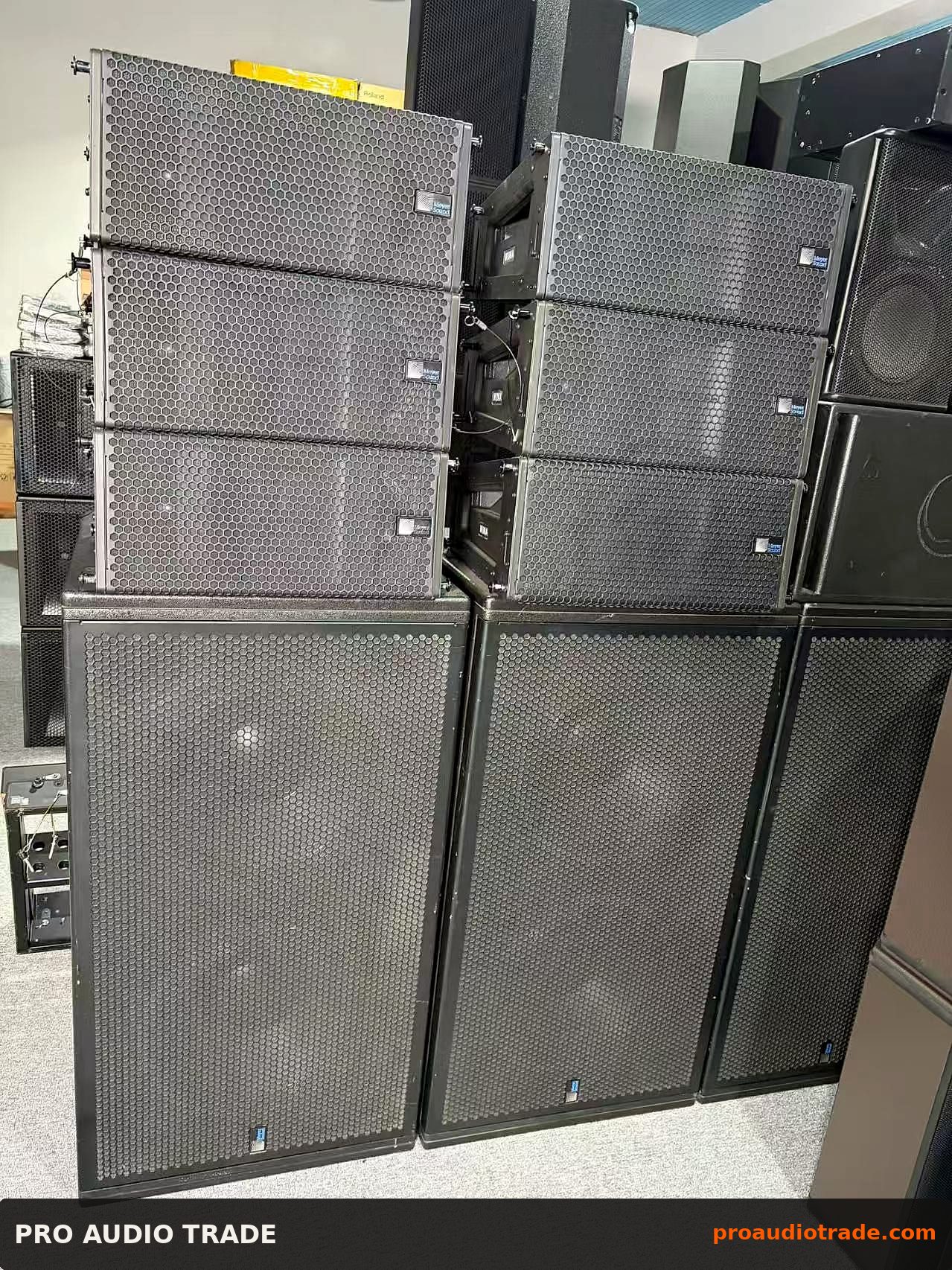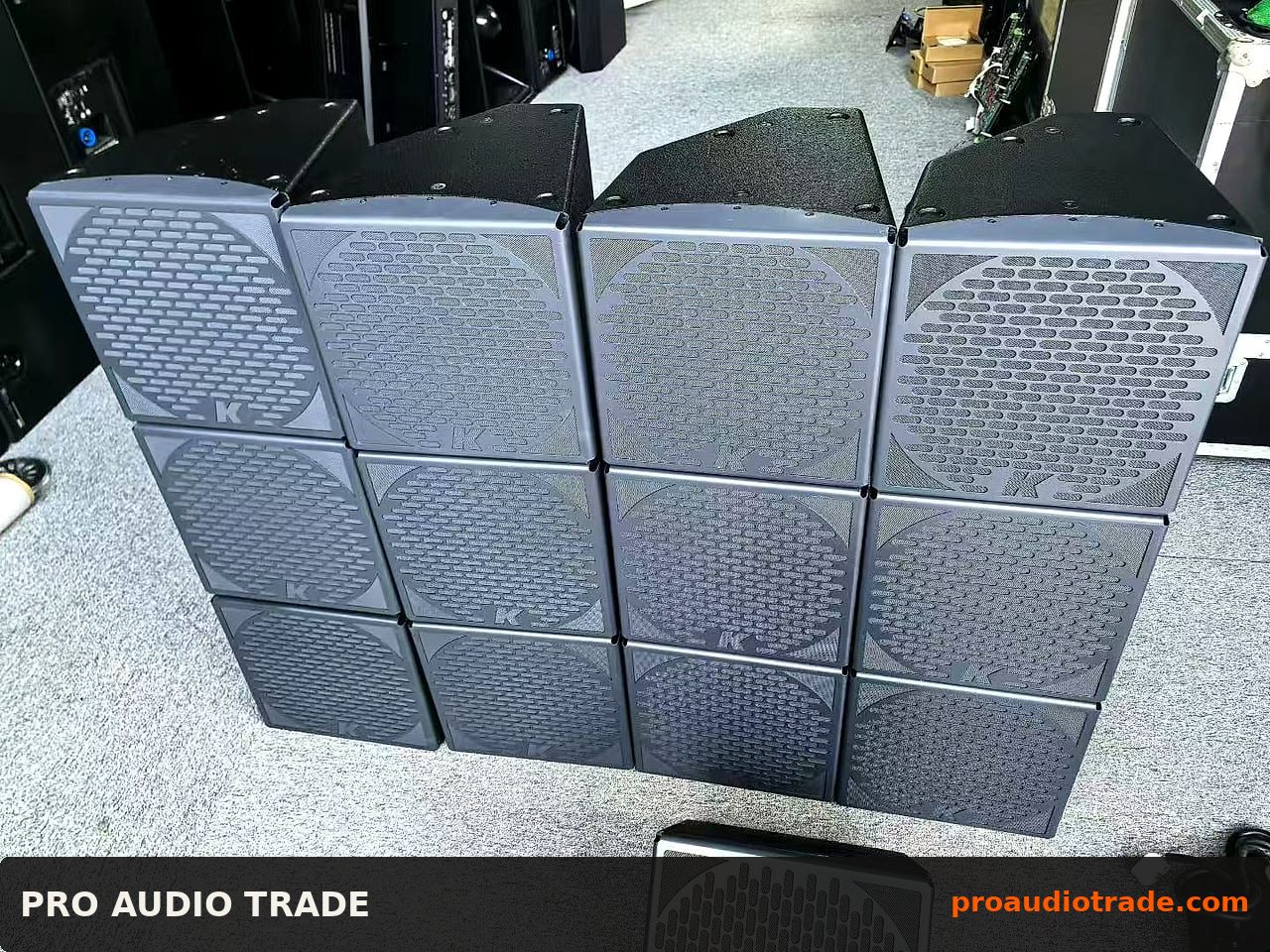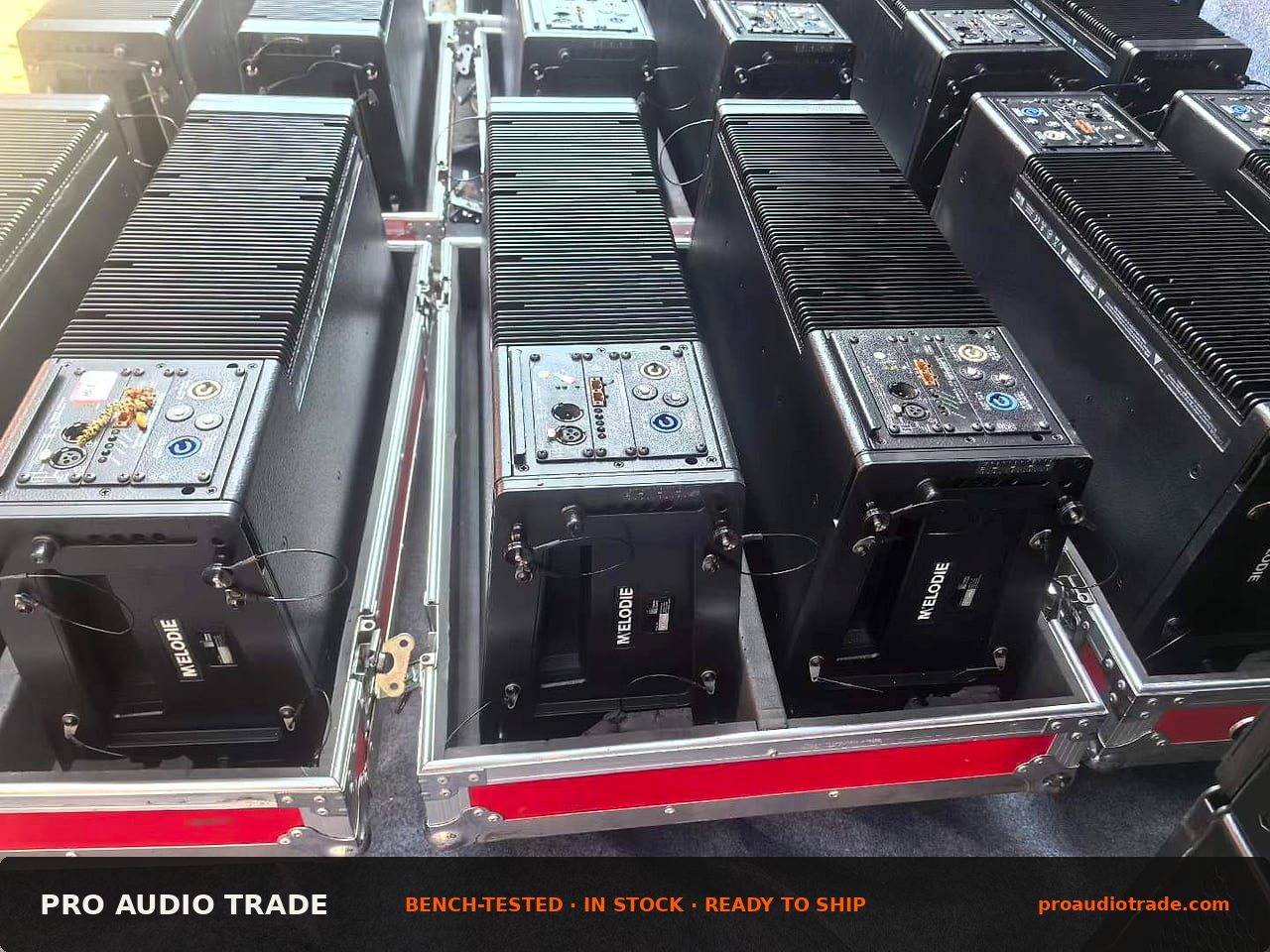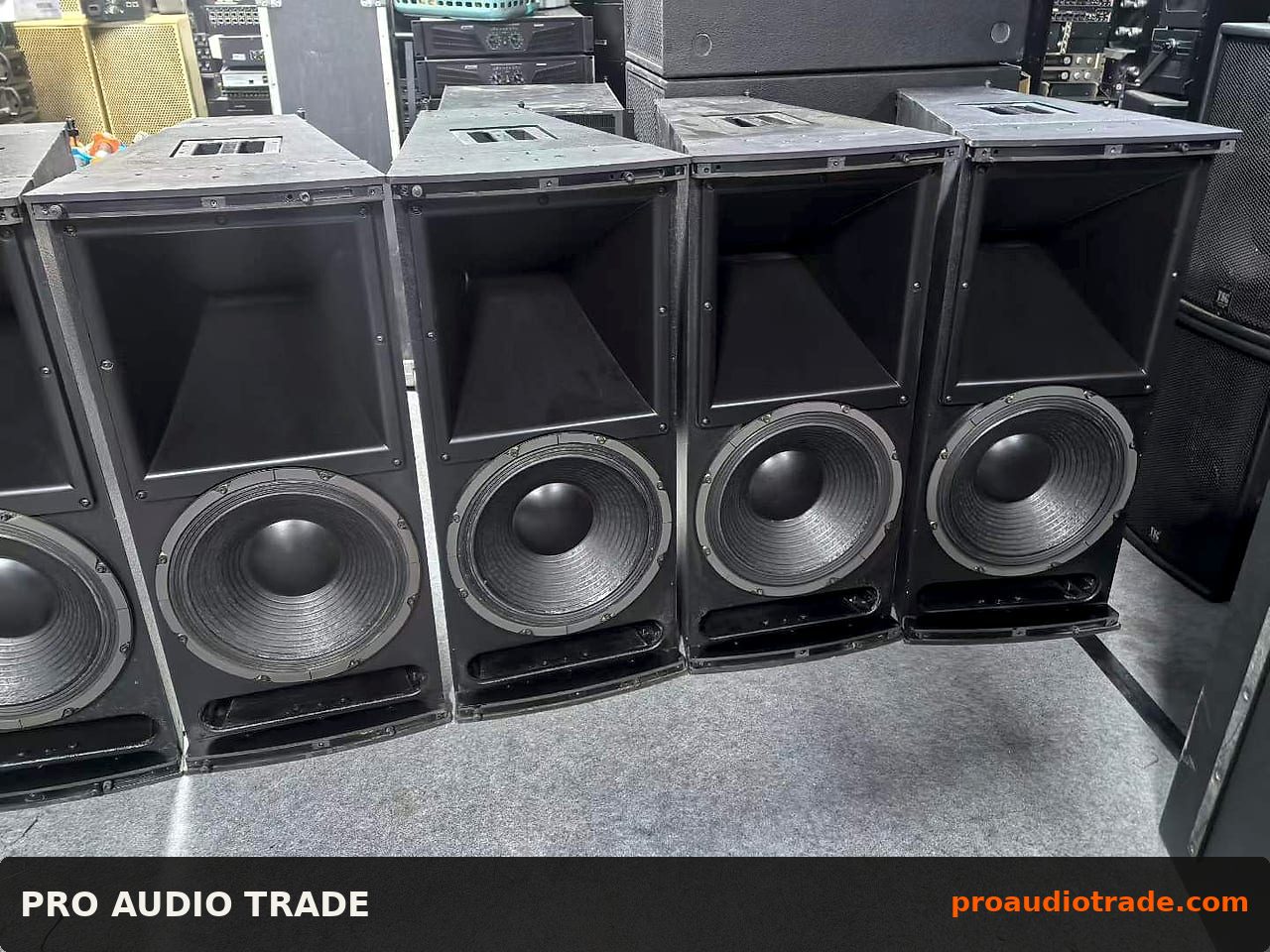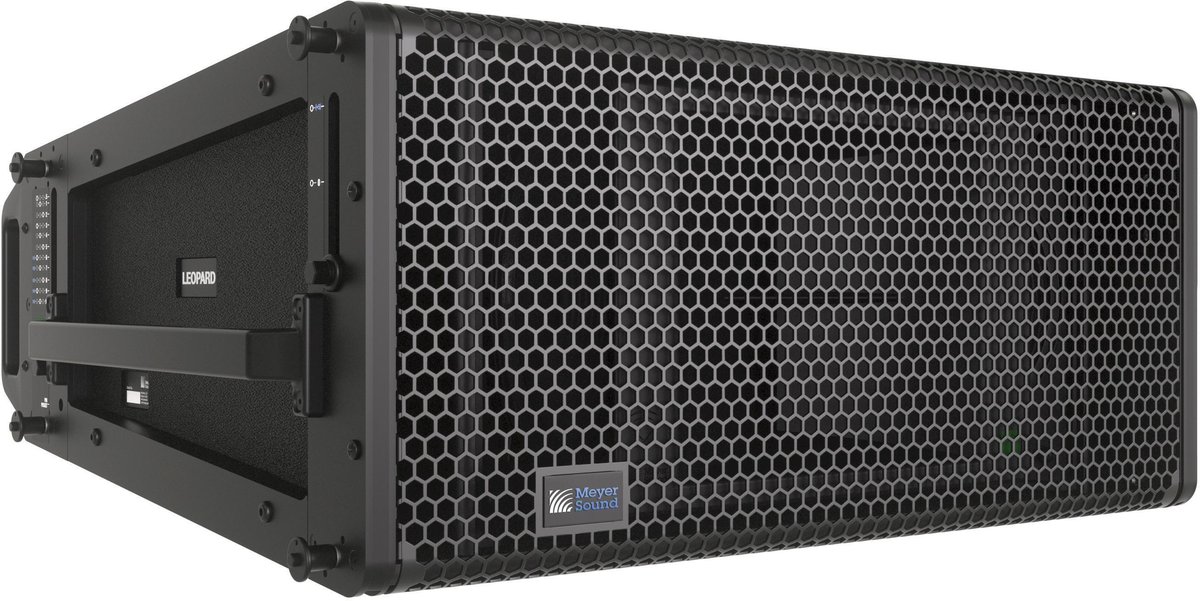
If you are sourcing a Meyer Sound LEOPARD line array for a rental fleet, integration project, or touring inventory, the used market is where the real value sits. The LEOPARD is a compact, self-powered 2-way box with a 12-inch woofer and a 4-inch compression driver, delivering up to 138 dB SPL with Meyer's trademark phase coherence and low distortion. On the used market, a single LEOPARD cabinet typically trades between $6,500 and $9,500 depending on age, condition, and whether it comes with a flying frame, rigging accessories, or a fresh factory service. Complete arrays with four to eight boxes and a 900-LFC or 750-LFC sub package push the per-box effective price down, but buyers should always separate cabinet value from rigging and processing value.
Compared with the larger LEOPARD's sibling, the LYON, the LEOPARD offers a lighter footprint and easier truck-pack for mid-size venues and corporate events, which is why rental firms in the CIS, Middle East, and Africa keep demand steady. Against the L-Acoustics K2 or d&b V-Series, the LEOPARD holds its own on vocal clarity and pattern control, but the used price gap is narrower than many expect: a clean 2019–2021 LEOPARD often lists within 10–15% of a comparable K2, so condition and service history matter more than brand alone. In our fixed ranking of used LEOPARD value tiers: (1) 2020+ units with recent Meyer factory service and full rigging — top of the market at $8,800–$9,500; (2) 2017–2019 units with original rigging and clean cosmetics — $7,500–$8,500; (3) 2014–2016 units with minor cosmetic wear — $6,500–$7,400; (4) older or ex-tour units with unknown service history — below $6,500 and only worth it if you budget for driver inspection.
Inspection is where deals are won or lost. Ask for the cabinet's service log and confirm whether the self-powered amplifier module has been updated to the latest firmware; Meyer's self-powered architecture means a failed amp module is a major cost, so test each box at full output for at least 20 minutes and listen for HF compression driver fatigue or LF woofer rub. Check the rigging: bent quick-lock pins, worn fly bars, and missing safety ratings are common on ex-rental LEOPARDs, and replacement rigging from Meyer is not cheap. Also verify the cabinet's serial number against Meyer's records to confirm it is not a stolen or grey-market unit, and inspect the grille and cabinet corners for impact damage that can indicate internal driver misalignment. For buyers in South America and Africa, factor in shipping weight and voltage configuration — LEOPARD is available in 100–240 V versions, but confirm the actual module voltage before purchase.
Your next step is to request a written condition report with photos of the amp module, rigging, and driver cones, plus a short video of the box running pink noise at high level. Compare at least three listings across regions, because LEOPARD pricing varies significantly between European, Middle Eastern, and CIS sellers due to shipping and local demand. If you are building a full array, negotiate the rigging frame and bumpers into the package rather than buying them separately, and budget 5–8% of the purchase price for a factory check-up. For rental firms, a used LEOPARD with documented service history is a safer bet than a cheaper unit with unknown provenance — the amplifier module alone can cost more than the price difference.