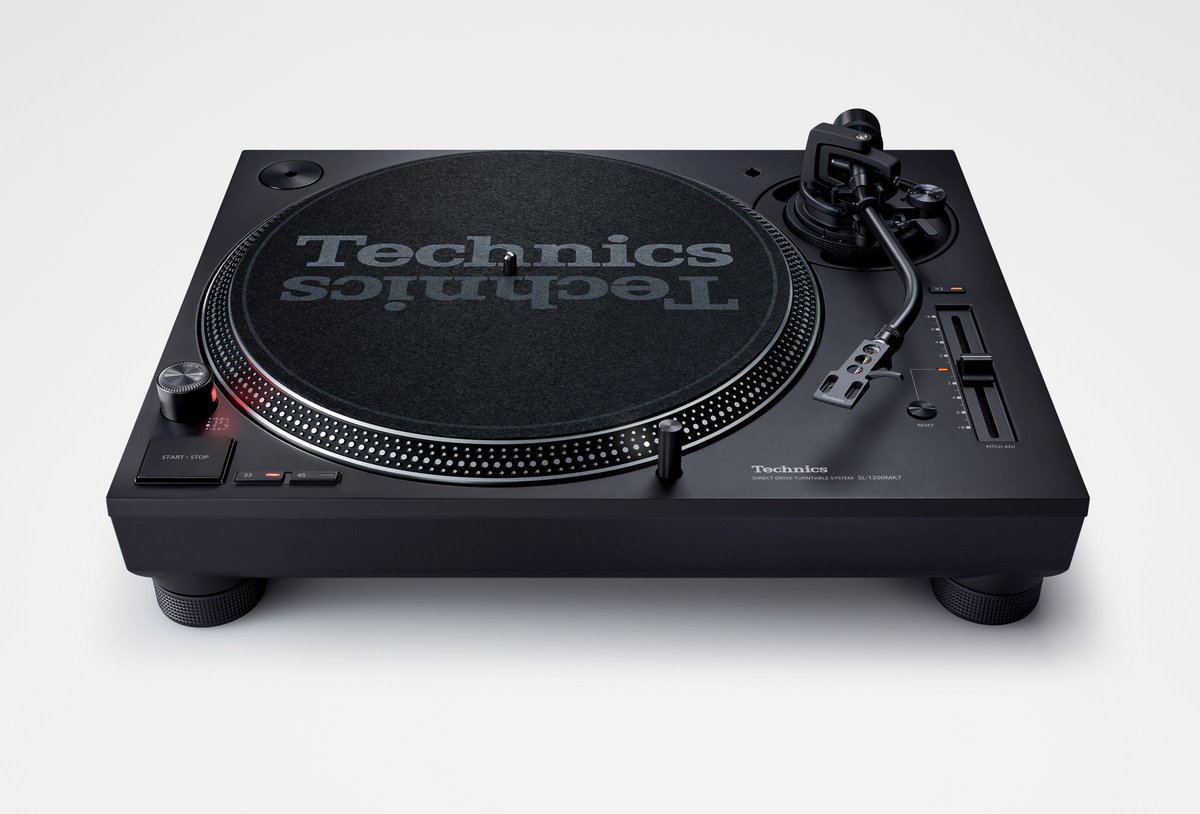
The Technics SL-1210MK7 is the current-production direct-drive turntable that many rental firms, clubs, and integrators default to when they need a reliable, rider-friendly deck. But in the used wholesale market, it competes with older Technics models, Pioneer DJ units, and a handful of other direct-drive workhorses. This comparison breaks down where the MK7 fits in a professional inventory, what actually matters for integration, how to inspect used stock, and how total cost of ownership stacks up against alternatives.
Where the SL-1210MK7 fits in a rental or venue inventory
The MK7 is the modern reissue of the legendary SL-1200 series, built for DJ use with a coreless direct-drive motor, adjustable starting torque, and a redesigned tonearm. For rental companies, it is a safe rider item: most touring DJs know the feel, and it accepts standard headshells and cartridges. Venues like it because it is robust and serviceable. Integrators specify it when a client wants a familiar, industry-standard deck for DJ booths, listening rooms, or broadcast-style setups.
Compared with alternatives, the MK7 sits in a middle ground. It is more expensive than a used SL-1210MK2 or MK5, but it offers warranty-backed reliability when bought new. Against Pioneer DJ's PLX-1000, the MK7 is lighter and has a different torque curve; the PLX-1000 is often preferred by open-format DJs for its heavier feel. Reloop RP-7000 MK2 and Audio-Technica AT-LP1240 are budget-friendly direct-drive options but lack the Technics brand cachet and long-term parts support. For B2B buyers, the decision often comes down to rider acceptance, serviceability, and whether the client insists on the Technics name.
Key specs that matter for integration work
For integration, the MK7's most relevant specs are the coreless direct-drive motor with selectable torque (starting torque can be set to low or high), the static-balance S-shaped tonearm with adjustable height, and the detachable RCA cables and grounding terminal. The die-cast aluminum chassis and heavy rubber base help isolate vibration, which matters in loud club environments. The MK7 also has a digital pitch control with ±8% and ±16% ranges, and a reverse play function.
Compared with the SL-1210MK2, the MK7 loses the classic quartz lock button but gains a more modern motor control and a lighter platter (the MK7 platter is aluminum die-cast, not the heavy zinc alloy of older models). Some engineers note that the MK7 feels slightly less inert than a vintage MK2, but in practice, proper isolation and a solid plinth solve most issues. The tonearm on the MK7 is not interchangeable with older models, so if a client has a collection of spare arms, that is a consideration. For fixed installations, the MK7's detachable cables are a plus for service; for touring, the lack of a hinged dust cover (it uses a removable cover) is a minor inconvenience.
Used-buying checklist: what to inspect and what to ask the seller
When buying used SL-1210MK7 units wholesale, start with the platter and spindle. Spin the platter by hand and listen for bearing noise; a gritty or rumbling sound indicates worn bearings. Check the tonearm for play in the vertical and horizontal bearings—gently rock the arm and feel for looseness. Inspect the stylus and cartridge, but assume you will replace them unless the seller provides a known-good cartridge with low hours. Look at the pitch fader for smooth operation and no dead spots; the digital pitch on the MK7 is generally reliable, but fader wear is common on any DJ deck.
Ask the seller for the unit's service history, whether it has been used in a club or studio, and if the motor has ever been replaced. Request photos of the tonearm bearings, the platter edge, and the RCA output area. For B2B orders, ask for a test report: speed accuracy at 33 and 45 RPM, wow and flutter measurements if available, and a note on cosmetic grade. Also confirm whether the unit includes a headshell, slipmat, and dust cover, as these are often missing in used stock. If buying multiple units, ask for serial number ranges to avoid mixing production batches with known issues (early MK7 units had isolated reports of motor noise, though most were resolved under warranty).
Price context and total cost of ownership
On the used market, SL-1210MK7 prices vary by region and condition. In CIS and Middle East wholesale channels, expect to pay a premium over used SL-1210MK2/MK5 units, but less than new retail. Compared with a new Pioneer PLX-1000, a used MK7 can be 20-30% cheaper, but you lose the Pioneer's heavier platter and some riders specifically request Pioneer. Reloop RP-7000 MK2 and Audio-Technica AT-LP1240 are significantly cheaper used, but resale value and rider acceptance are lower.
Total cost of ownership includes cartridge replacement, tonearm servicing, and motor maintenance. The MK7's motor is sealed and generally not user-serviceable, so if it fails, replacement is costly. However, failure rates on the MK7 are low compared with older models. Parts availability is good because Technics still supports the platform. For rental fleets, the MK7's lighter weight reduces shipping costs, which matters for freight-heavy B2B orders. Budget for a full service (clean pitch faders, check bearings, replace RCA cables if needed) on each used unit; this typically adds 10-15% to the purchase price but ensures reliability.
How a B2B order works: grade, freight, MOQ
Wholesale used audio gear is typically graded cosmetically (A, B, C) and functionally (tested working, minor faults, for parts). For SL-1210MK7, insist on functionally tested units with a test report. MOQs vary by seller; some require 5-10 units per order, others allow mixed pallets. Freight is usually arranged by the buyer or through the seller's forwarder; for CIS, Middle East, South America, and Africa, sea freight is common for larger orders, while air freight is used for urgent small batches. Always clarify Incoterms (FOB, CIF, DDP) and whether the seller handles export documentation. Ask for packing details: original boxes are rare, so ensure units are shipped with platter removed and tonearm secured. Insurance is recommended for high-value orders.
Closing takeaway
The Technics SL-1210MK7 is a solid, rider-friendly choice for rental and venue inventories, but it is not the cheapest or the only option. For B2B buyers, the key is to compare total cost of ownership, rider acceptance, and serviceability. Used MK7 units offer a good balance of modern reliability and brand recognition, provided you inspect carefully and buy from a seller who provides test reports and clear grading. If budget is tight and riders allow, older Technics or Reloop decks can work, but the MK7 remains the safest bet for professional deployments.