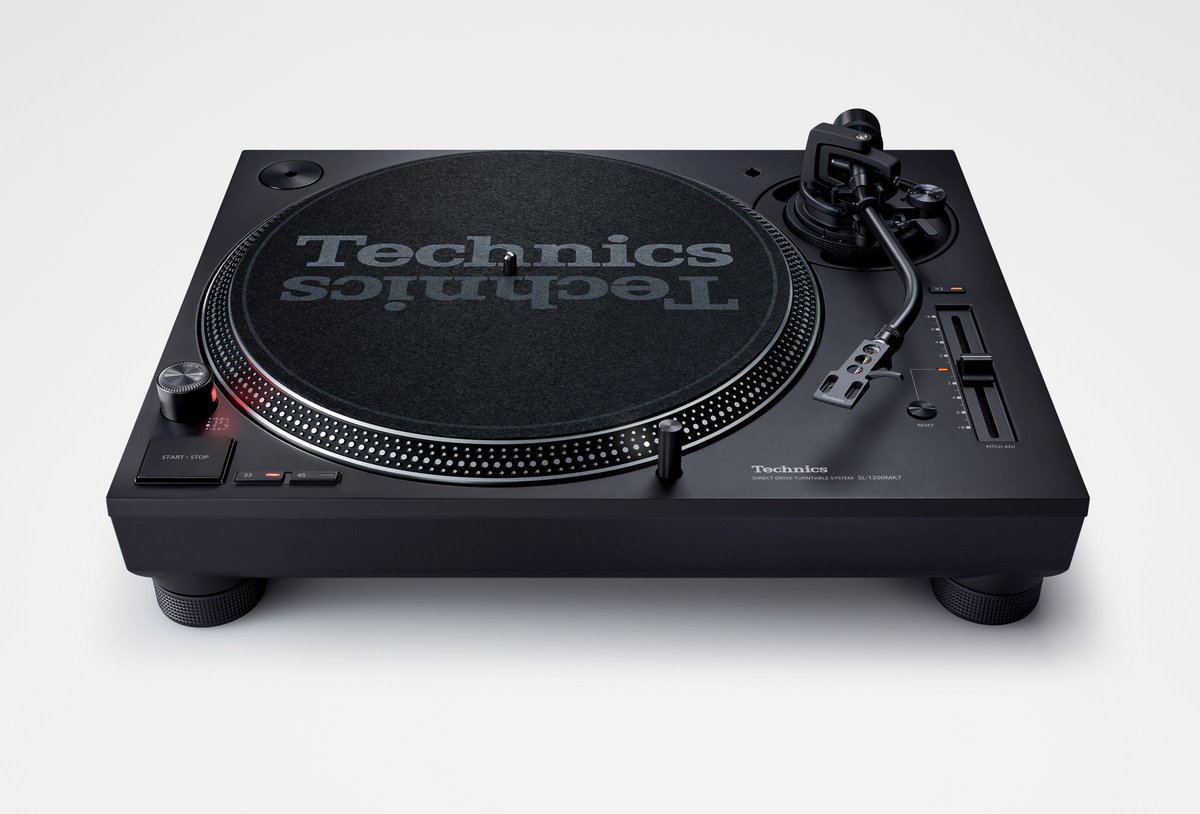
The Technics SL-1210MK7 is the current-production direct-drive turntable that many rental firms, clubs, and integrators now specify for new installs. But with new units priced firmly in premium territory, the used market has become the go-to for budget-conscious B2B buyers. This guide breaks down what actually drives the used price, what to inspect before you commit, and how to structure a wholesale order that won't leave you with a pallet of problem units.
Where the SL-1210MK7 fits in a rental or venue inventory
The MK7 is the successor to the legendary SL-1200 series, and it slots into inventory as a modern, serviceable alternative to aging MK2/MK5 stock. For rental companies, it's the unit clients ask for when they want "the Technics feel" without the risk of 20-year-old capacitors and worn tonearm bearings. Venues and integrators use it in DJ booths, listening bars, and broadcast-style setups where a fixed, reliable platter is preferred over belt-drive alternatives. Because the MK7 is still in production, parts availability is better than for legacy models, which matters for long-term fleet maintenance. The key B2B angle: used MK7s let you standardize a booth or rental fleet on a current model at a fraction of new cost, provided you buy tested stock rather than as-is units.
Key specs that matter for integration work
The MK7 keeps the core formula: direct drive, high torque, and a die-cast aluminum chassis. The torque spec is what rental firms care about most—it determines how quickly the platter recovers after scratching and how the unit feels under back-cueing. The MK7's torque is adjustable via a switch, which is useful when a venue wants a lighter feel for certain DJs. The tonearm is a static-balance S-shaped design with adjustable height, and the pitch fader offers selectable ranges (±8% and ±16%). For integrators, the important details are the detachable power and RCA cables (a change from the fixed cables of older models), the lack of a built-in preamp (so you'll need a phono stage or a mixer with one), and the standard 230V/120V regional variants. The LED stylus illuminator is a nice touch for dark booths. What pros check in deployment: whether the unit has been used for scratching (heavy torque wear), whether the pitch fader has been abused, and whether the platter spins true without wobble.
Used-buying checklist: what to inspect and what to ask
Start with the platter and spindle: remove the platter and check the spindle for play and the platter for warping. Spin the platter by hand—it should feel smooth with no grinding. Check the tonearm bearings by gently rocking the arm; any play or notchiness is a red flag. Inspect the pitch fader for smooth travel and verify it holds speed at both extremes. Look at the RCA and power connectors for bent pins or cracked housings. Ask the seller for a video of the unit holding speed at 33 and 45 RPM with a strobe or app, and request the serial number to check production batch. For B2B orders, ask whether units have been tested under load (with a record and stylus) and whether they come with the original dust cover and slipmat. Typical failure points on used MK7s: pitch fader wear from heavy DJ use, tonearm bearing play from transport damage, and cosmetic wear on the chassis edges. Units from rental fleets often have the most hours, so ask about provenance.
Price context and total cost of ownership
Used SL-1210MK7 prices vary widely by region and condition. In CIS and Middle East markets, tested units with minor cosmetic wear typically trade at 60–75% of new street price, while mint-condition units with original packaging can approach 85%. In South America and Africa, import duties and freight push landed costs higher, so the spread between as-is and tested stock matters more. Total cost of ownership includes: a phono stage if your mixer lacks one, replacement styluses, and potential servicing (pitch fader replacement is the most common repair). Because the MK7 is current-production, parts are available, which lowers long-term risk compared to legacy MK2s. For a rental fleet, buying tested used units with a short warranty from a B2B supplier usually beats auction-site gambles—you get consistent grading and a paper trail.
How a B2B order works: grade, freight, MOQ
Wholesale used audio gear is typically graded (A: mint, B: minor cosmetic wear, C: functional with visible wear). Ask for the grading scale in writing and photos of actual units, not stock images. MOQ varies by supplier—some sell single units, others require pallets of 5–10 for better freight rates. Freight for turntables is volumetric; insist on double-boxing with platter removed and tonearm secured. For CIS and Middle East, road freight is common; for South America and Africa, sea freight with proper export documentation. Confirm voltage variant (230V for most of these regions) and plug type. A reputable B2B supplier will provide a test report per unit and a return policy for DOA (dead on arrival) units. Payment terms for repeat buyers often include partial prepayment and balance on delivery.
Used SL-1210MK7 stock makes sense for B2B buyers who need current-model reliability without new-unit pricing—provided you buy tested, graded units from a supplier who documents condition and stands behind the sale. Focus your inspection on the pitch fader, tonearm bearings, and platter spindle, and factor in freight and voltage compatibility before you commit.