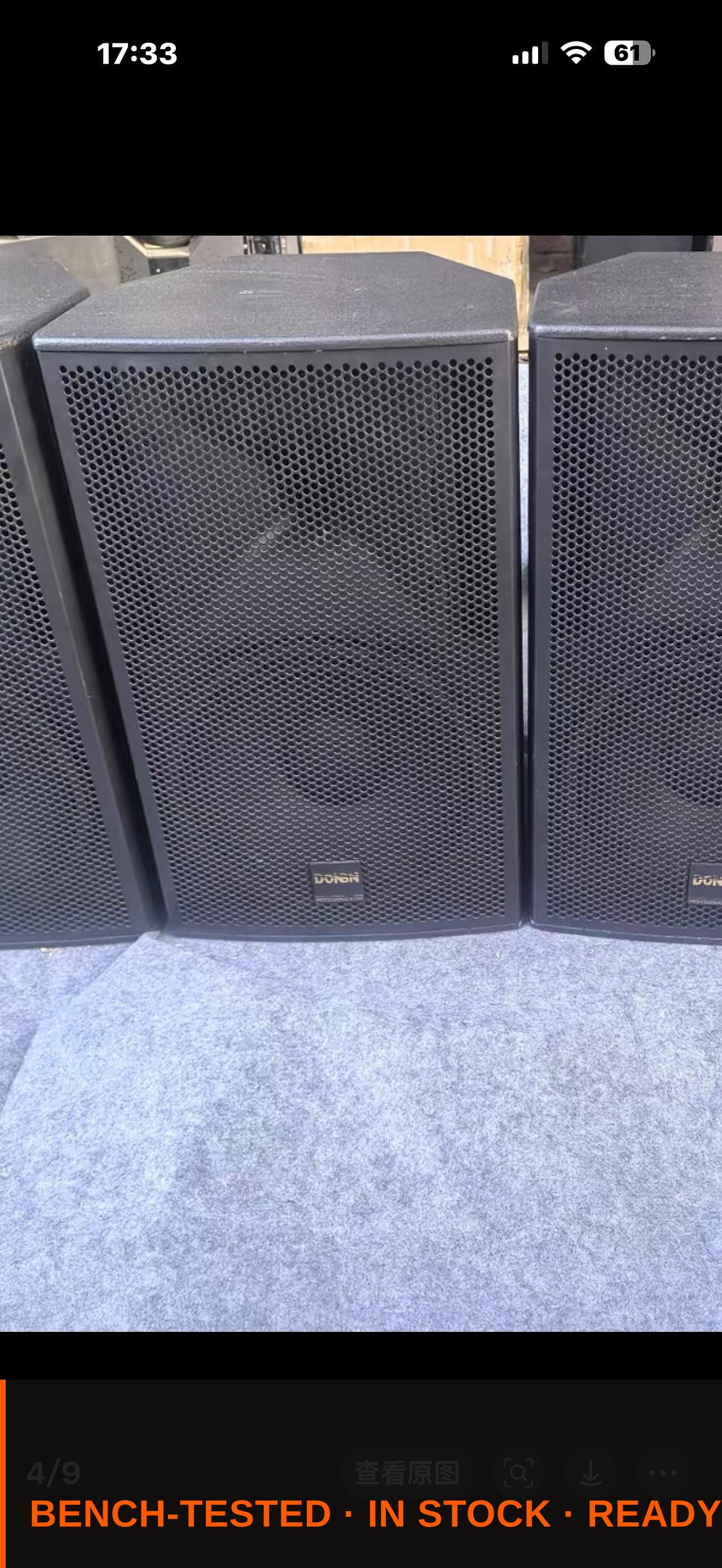
The DONBN DW-12 is a 12-inch two-way active loudspeaker that has become a familiar sight in rental fleets, small venues, and integration projects across CIS, the Middle East, South America, and Africa. It is not a premium flagship box, but it fills a specific niche: affordable, reasonably loud, and easy to deploy for speech, playback, and light live music. For B2B buyers sourcing used stock, the DW-12 makes sense when you need volume, consistent form factor, and predictable serviceability without paying new-market prices. This review covers what the DW-12 actually is, where it fits in inventory, what to inspect on used units, how pricing and total cost of ownership work, and how a wholesale order is typically structured.
Where the DW-12 fits in a rental or venue inventory
The DW-12 is best understood as a utility box. It works as a main PA for conference rooms, houses of worship, small clubs, and corporate events where SPL requirements are moderate and speech intelligibility matters more than deep bass. Rental firms often use it as a fill or delay speaker, or as a compact main system for dry-hire clients who need something simple to set up. Integrators specify it for background music and paging in retail, hospitality, and education environments where a powered box with a built-in mixer simplifies wiring.
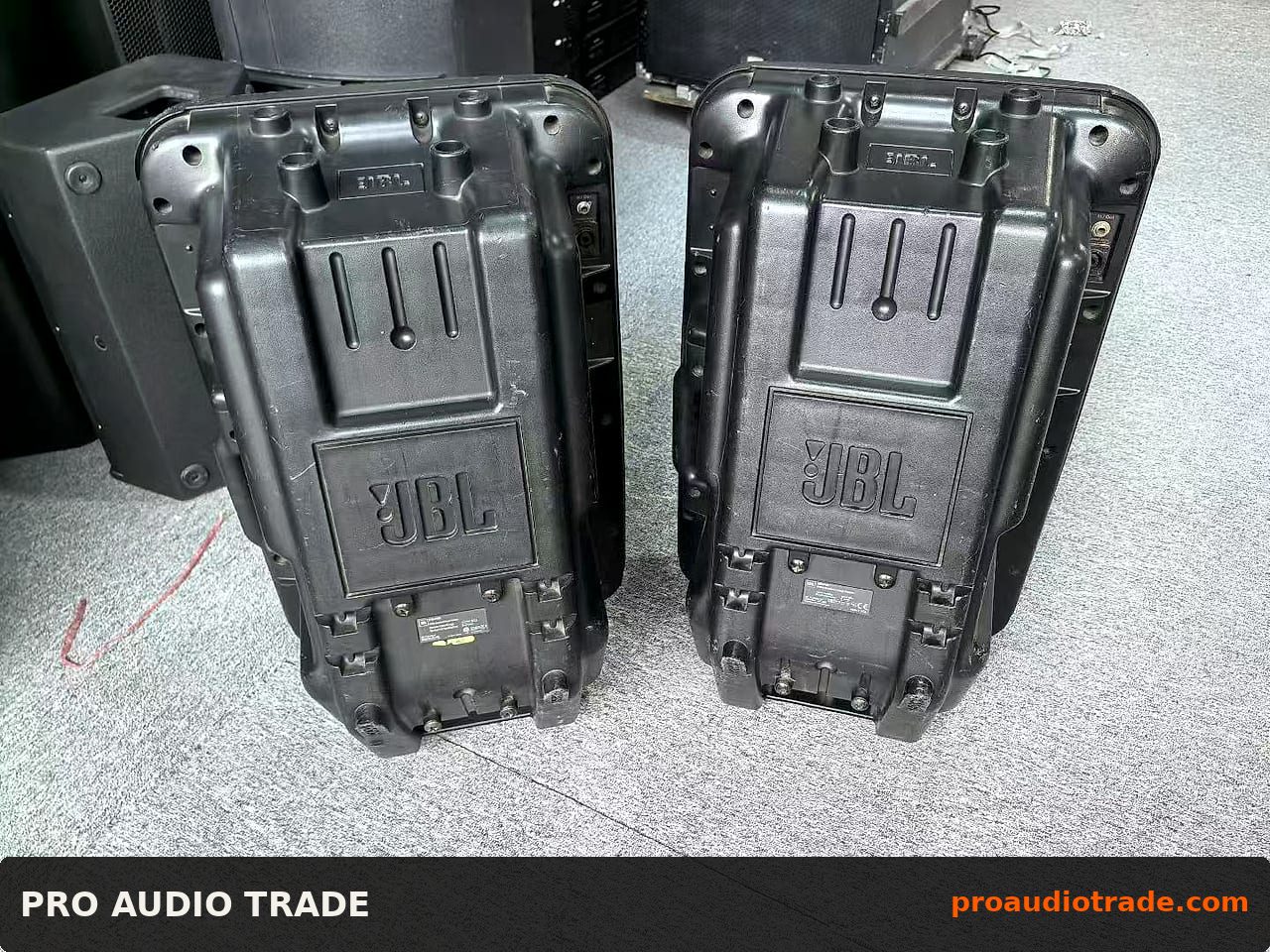
In real deployments, the DW-12 behaves like most 12-inch plastic-enclosure actives: it delivers usable output for its class, but it is not a subwoofer substitute. For music-heavy events, pair it with a sub or cross it over high. The rear panel typically offers combo XLR/TRS inputs, a mic/line switch, and basic EQ, which is enough for solo performers and small presentations. The plastic cabinet keeps weight down, which matters for rental crews loading vans and for wall or truss mounting in fixed installs. Because the model is common, spare parts and replacement drivers are relatively easy to source in many regions, which is a real advantage for fleet operators.
Key specs that matter for integration work
The DW-12 is a 12-inch woofer plus compression driver on a horn, actively crossed over and powered by a built-in Class-D amplifier. Power ratings vary by revision, but typical figures sit around 300–400 W peak for the woofer and a separate HF amplifier, with a maximum SPL in the 120–125 dB range. Frequency response is usually quoted from around 55 Hz to 20 kHz, though real-world low-end output rolls off earlier; do not expect sub-bass. Coverage is typically 90° x 60°, which is wide enough for most rooms but not a line-array pattern.
For integration work, the important details are the input section, the power supply, and the mounting options. Check whether the unit accepts 100–240 V (many are multi-voltage, which helps across CIS and Middle East projects) and whether the IEC inlet is standard. Look for a balanced combo input, a link output for daisy-chaining, and a ground-lift switch if you are dealing with hum in fixed installs. Mounting points are usually a 35 mm pole socket plus M10 rigging points; confirm they are intact and not stripped. Weight is around 15–18 kg depending on revision, which is manageable for one person but adds up in a truck pack.
Used-buying checklist: what to inspect and what to ask
Start with the cabinet. Cracks around the pole socket and handle recesses are common on rental units, and a cracked cabinet can buzz or fail under load. Check the grille for dents and the woofer surround for foam rot or tears. On the amplifier, look for burnt smells, swollen capacitors, and scorched connector pins. Power the unit up and listen at low volume for hum, hiss, and crackle in the pots; dirty potentiometers are a frequent issue on older stock. Test both inputs and the link output, and confirm the HF driver works by sweeping a test tone or playing a familiar track.
Ask the seller for the serial number and revision, photos of the rear panel, and a short video of the unit playing at moderate volume. Request confirmation that the amplifier has been tested under load, not just powered on. For fleet buyers, ask whether the units are from a single batch, whether they have been serviced, and what the return policy is on dead-on-arrival units. If the seller offers grading, ask for the grading criteria in writing. A “tested working” claim without specifics is worth less than a documented bench test.
Price context and total cost of ownership
Used DW-12 pricing varies widely by region and condition. In CIS and Middle East markets, expect used units to trade at a significant discount to new, often in the range of 40–60% of new street price depending on grade and accessories. In South America and Africa, import duties and freight can push landed cost up, so local stock is usually preferable even at a premium. Accessories matter: a unit with a padded cover, pole mount, and original power cable is worth more than a bare box.
Total cost of ownership includes reconing or driver replacement, amplifier repair, and cosmetic work. Because the DW-12 is a common model, parts are generally available, but labor costs vary. For rental fleets, the calculation is straightforward: if the unit survives a season of dry hires with minimal service, it pays for itself. For integrators, the risk is in units that have been abused in mobile use; a bench-tested unit from a reputable wholesaler reduces that risk. Budget for a small contingency per unit for pots, connectors, and grille straightening.
How a B2B order works: grade, freight, MOQ
Wholesale orders for used DW-12 units typically start with a grade: A (light cosmetic wear, fully tested), B (visible wear, fully functional), or C (functional with cosmetic defects, sold as-is or with limited warranty). Ask for the grade definitions and insist on photos of actual units, not stock images. MOQ varies by seller; some wholesalers sell single units, while others require a pallet or a minimum order value. For fleet buyers, mixed pallets of DW-12 and matching subs are common.
Freight is the biggest variable. Used speakers are bulky and heavy, so sea freight is cost-effective for large orders, while air freight suits urgent single units. Confirm whether the seller handles export documentation, palletization, and insurance. For CIS and Middle East buyers, check customs requirements for used electronics and whether the seller provides commercial invoices with correct HS codes. Ask about lead times and whether the units are tested again before dispatch. A clear Incoterms arrangement (FOB, CIF, or DAP) avoids surprises at the border.
Used DONBN DW-12 stock makes sense when you need dependable utility boxes at a budget price and you buy from a seller who tests and grades honestly. Inspect cabinets and amplifiers, ask for bench-test evidence, and factor freight and duties into your landed cost. For rental firms and integrators in CIS, the Middle East, South America, and Africa, a tested used batch can deliver the same deployment flexibility as new stock at a fraction of the capital outlay.