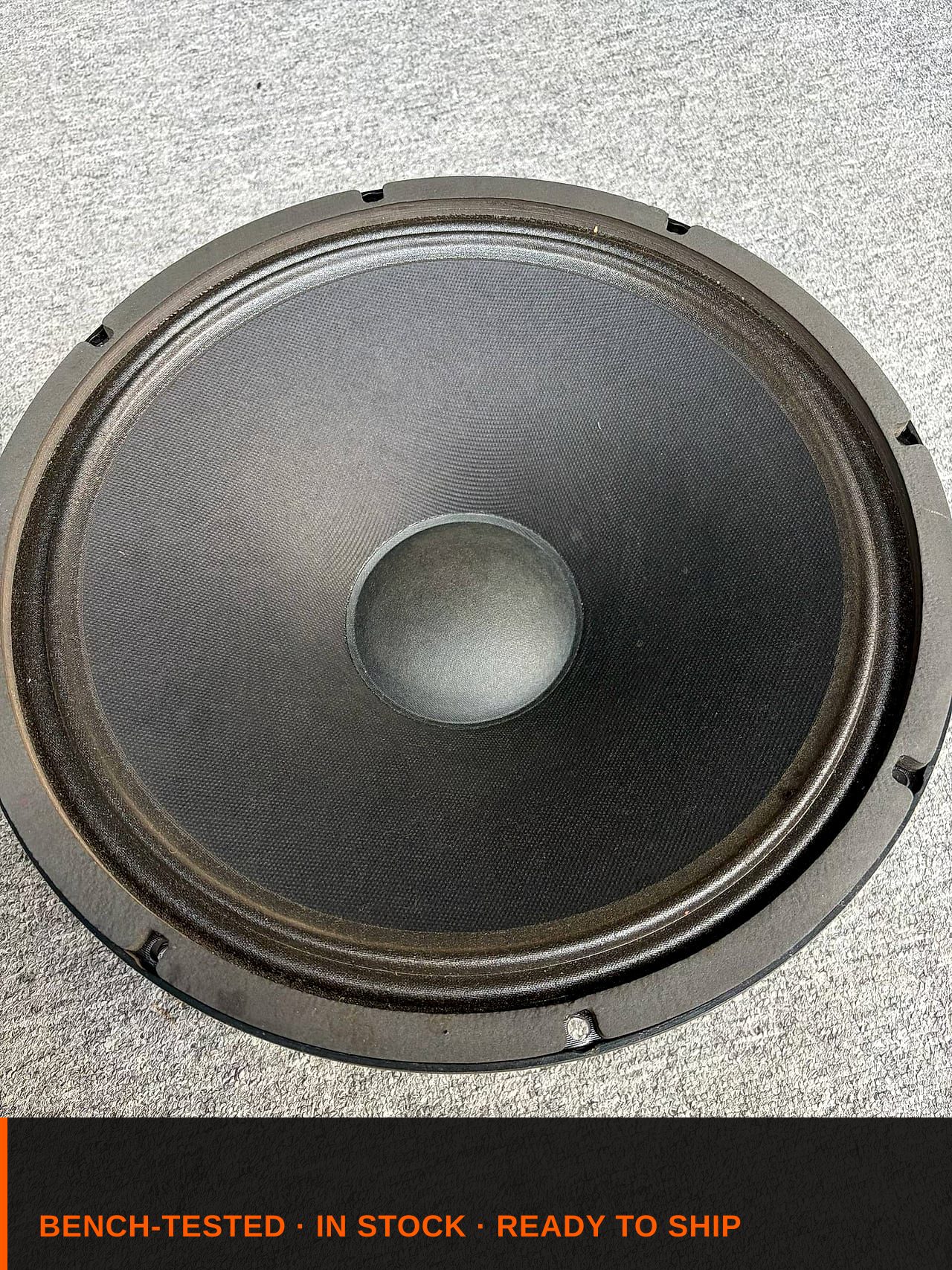
When specifying a used 15-inch woofer for rental inventory or fixed installs, the Eminence 151351D often surfaces as a candidate. This guide compares it against common alternatives, highlights what matters for integration work, and explains how to buy tested used stock with confidence.
Where the 151351D fits in rental and venue inventory
The Eminence 151351D is a 15-inch, 8-ohm woofer with a 3-inch voice coil and a rated power handling around 600W AES. It is a workhorse driver often found in mid-tier PA subs and two-way boxes. In rental fleets, it suits applications where weight and cost are balanced against output—think corporate AV, small clubs, and mobile DJ rigs. For venue installs, it works well in compact subwoofers or as a replacement in older Eminence-loaded cabinets. Compared to alternatives like the Eminence Kappa Pro-15LF, the 151351D offers slightly less excursion but a more controlled mid-bass, making it a good fit for full-range boxes crossed at 1.2–1.5 kHz. Against the Celestion FTR15-4080FD, the 151351D is generally more affordable and easier to source in CIS and Middle East markets, though the Celestion may edge it out in sub-bass extension. For integrators, the 151351D’s 8-ohm impedance simplifies parallel wiring in 4-ohm arrays, and its cast aluminum frame helps with heat dissipation during long events.
Key specs that matter for integration work
Beyond power handling, pay attention to sensitivity (around 98 dB), frequency response (45 Hz–3.5 kHz), and Xmax (around 5.5 mm). These determine how the driver behaves in a given cabinet. The 151351D’s relatively high sensitivity means it pairs well with modest amplifiers, which is a plus for rental firms looking to maximize ROI on amp racks. Its frequency response rolls off gently above 2 kHz, so it can be used in two-way designs with a simple crossover. For subwoofer duty, the Xmax is adequate for moderate SPL but not for high-output EDM events—alternatives like the B&C 15TBX100 offer more excursion. Also check the mounting depth and cutout diameter: the 151351D fits standard 15-inch cutouts (about 352 mm) and has a depth of 165 mm, which may be tight in shallow cabinets. The 3-inch voice coil is a common failure point if driven into clipping; ensure your DSP limiters are set conservatively.
Used-buying checklist: what to inspect and what to ask
When evaluating a used 151351D, start with a visual inspection of the cone and surround. Look for cracks, tears, or signs of reconing—non-original cones often indicate a cheap repair. Check the spider for sagging or separation from the frame. Push the cone gently to feel for voice coil rub; any scraping sound means the coil is misaligned or the former is swollen. Measure DCR with a multimeter: it should read around 6.0–6.8 ohms for an 8-ohm driver; significantly higher or open circuit indicates a burnt coil. Ask the seller for a sweep test or impedance curve—a healthy driver will show a smooth impedance peak at resonance (around 40 Hz) without spurious dips. Request photos of the terminals and gaskets; corroded terminals are common in humid climates. For rental firms, ask about the history: was it used in a sub or full-range box? Was it ever driven with a clipped amp? A driver that has seen heavy clipping may have a weakened coil. Also confirm the model number on the magnet—some sellers mislabel. Finally, ask for the serial number and whether it has been reconed; original Eminence recone kits are preferred.
Price context and total cost of ownership
On the used market, a 151351D typically sells for 40–60% of the new price, depending on condition and region. In CIS, expect $90–$140; in the Middle East, $100–$160; in South America and Africa, $110–$180 due to import costs. Compare this to alternatives: a used Kappa Pro-15LF might be $20–$30 more, while a Celestion FTR15-4080FD could be $40–$60 more. However, total cost of ownership includes recone costs (around $60–$80 for a genuine kit), shipping, and potential downtime. A tested unit with a warranty from a B2B marketplace reduces risk. For rental inventory, the 151351D’s availability and low cost make it a sensible choice for replacements, but if you need higher output, investing in a driver with more Xmax may save money on amp upgrades. Factor in freight: 15-inch woofers are heavy (around 8–10 kg each), so consolidate orders to reduce per-unit shipping.
How a B2B order works: grade, freight, MOQ
B2B wholesale marketplaces typically grade used gear as A (like new), B (good, minor cosmetic wear), or C (functional, heavy wear). For the 151351D, grade B is common and offers the best value. MOQs vary: some sellers require 5–10 units, but many accept mixed orders of 2–4. Always request a test report—reputable sellers provide impedance and sweep tests. Freight is usually arranged by the buyer or via the marketplace’s logistics partners; for CIS and Middle East, sea freight is economical for bulk orders, while air freight suits urgent needs. For South America and Africa, check import duties and use consolidated shipping to reduce costs. Payment terms often include escrow or letters of credit for first-time buyers. Confirm the warranty period (typically 30–90 days) and return policy. Ask for original packaging if possible; woofers shipped in generic boxes are more prone to damage.
In summary, the Eminence 151351D is a solid, cost-effective choice for rental and install applications where moderate output and reliability are priorities. Compared to alternatives, it offers a good balance of price, availability, and performance. When buying used, insist on test data and buy from a reputable B2B source to avoid hidden recone costs.