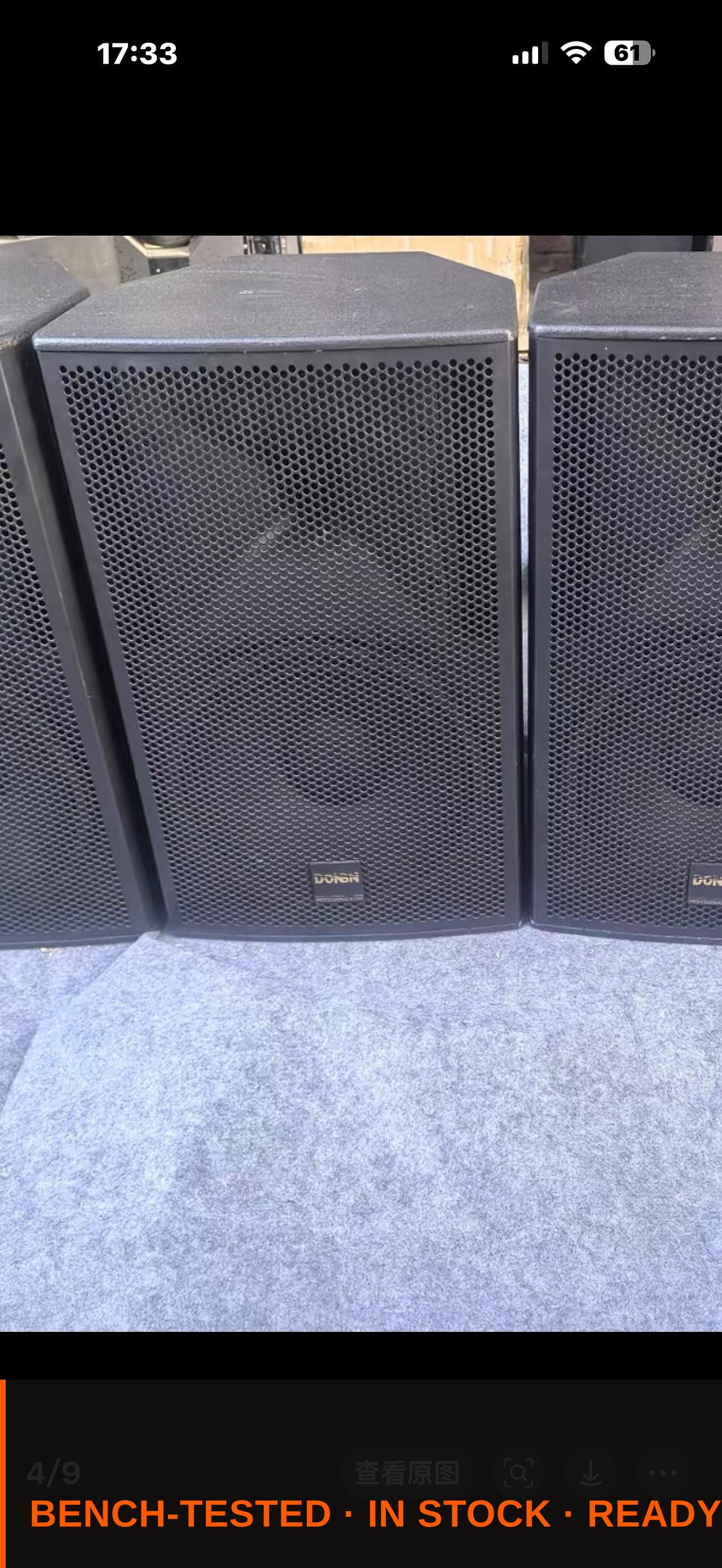
When you’re equipping a rental fleet, a venue, or an integration project on a tight budget, the DONBN DW-12 often appears on the shortlist. It’s a workhorse digital wireless system that promises reliable performance at a fraction of the cost of premium brands. But how does it stack up against alternatives in the used market, and what should you actually check before committing? This guide cuts through the noise for audio engineers, rental firms, and integrators in CIS, the Middle East, South America, and Africa who need tested, dependable gear without overspending.
Where the DW-12 fits in a rental or venue inventory
The DONBN DW-12 is a UHF wireless microphone system with a dual-channel receiver and two handheld transmitters. It’s commonly used in small to mid-sized venues, conference rooms, houses of worship, and mobile DJ setups. In a rental inventory, it fills the gap between entry-level systems and high-end digital wireless from brands like Shure or Sennheiser. Its main appeal is cost-effectiveness: you can deploy multiple systems for the price of one premium unit, making it suitable for events where absolute RF reliability isn’t mission-critical but decent performance is expected. For integrators, the DW-12 is often specified in budget-conscious installations where wired mics are impractical but the client won’t pay for top-tier wireless. It’s not a touring-grade system, but for corporate AV, classrooms, and small stages, it delivers acceptable results when properly set up.
Key specs that matter for integration work
The DW-12 operates in the UHF band (typically 500–900 MHz depending on region), with 12 selectable frequencies per band. The receiver offers balanced XLR and unbalanced 1/4-inch outputs, which simplifies connectivity to mixers and DSPs. The transmitters run on AA batteries, a plus for rental fleets because replacements are cheap and universally available. However, the frequency range must match local regulations—this is critical in CIS and Middle East markets where spectrum allocation varies. The DW-12’s RF output power is modest (around 10 mW), so range is limited to roughly 50–80 meters line-of-sight. For integration work, you’ll want to check if the unit supports external antennas; many DW-12 versions have fixed antennas, which can be a limitation in rack-mounted installations. Also, the receiver’s squelch circuit is basic, so in RF-congested environments, you may need to manage frequencies carefully. Compared to alternatives like the Sennheiser XSW series or Shure BLX, the DW-12 lacks advanced features such as IR sync or networked control, but it covers the essentials for basic wireless needs.
Used-buying checklist: what to inspect and what to ask
When evaluating a used DW-12, start with the transmitters: check the battery contacts for corrosion (a common issue with AA-powered gear), and test the on/off switch and mute button for firm action. The handheld mics often suffer from loose XLR connectors or damaged grilles—unscrew the head and inspect the capsule for debris or moisture damage. On the receiver, verify that all front-panel buttons and knobs work smoothly, and that the LCD displays are legible without dead pixels. Ask the seller for a photo of the internal boards if possible; look for signs of liquid damage or rework. Request a test recording or video showing the system powering up, syncing, and transmitting audio at a reasonable distance. For rental firms, ask about the history: was it used in fixed installs or on the road? Units from installations tend to be cleaner. Also, confirm the frequency band and whether it’s legal in your country. Finally, check the power supply—many DW-12 units use a 12V DC adapter, and third-party replacements can introduce noise. A genuine adapter is preferable.
Price context and total cost of ownership
On the used market, a DW-12 system typically sells for 40–60% less than a comparable new unit from a premium brand. But price alone is misleading. Consider the total cost of ownership: battery consumption (AA batteries add up for rental fleets), potential repairs (transmitter switches and receiver power jacks are common failure points), and the risk of frequency conflicts requiring coordination. Alternatives like the Shure BLX or Sennheiser XSW often have better build quality and resale value, but they cost significantly more upfront. For a rental company that needs 10 systems for a corporate event, the DW-12 can be a smart budget choice if you buy tested stock and keep spare transmitters. For integrators, the lower cost allows more units per project, but you must factor in the labor for frequency coordination and potential antenna upgrades. In regions where import duties and shipping are high, buying used from a reputable B2B marketplace with consolidated freight can reduce landed cost. Always compare the total package: unit, power supply, batteries, rack hardware, and any included mics.
How a B2B order works: grading, freight, and MOQ
On a B2B wholesale marketplace, used gear is typically graded: A (excellent, minimal wear), B (good, some cosmetic marks), C (fair, functional but visibly used). For the DW-12, Grade A units are ideal for client-facing rentals, while Grade B can work for internal or budget installations. Ask for a functional test report—reputable sellers provide one. MOQs vary: some sellers require a minimum of 5–10 units, especially for export orders. Freight is a major factor: for CIS, Middle East, South America, and Africa, consolidated shipping via air or sea is common. Always clarify Incoterms (FOB, CIF, DDP) and whether the seller handles export documentation. For small orders, express couriers like DHL or FedEx may be used, but for pallet quantities, sea freight is more economical. Check if the seller offers a warranty—even a 30-day warranty on used gear is valuable. Finally, confirm that the units are tested with local power standards (110V or 220V) and that the correct adapters are included.
In summary, the DONBN DW-12 is a viable budget option for rental and installation work when sourced carefully. It won’t match premium systems in RF stability or build, but for many applications in emerging markets, it’s a pragmatic choice. Focus on tested used stock, verify frequency legality, and calculate total cost—not just sticker price. With the right due diligence, the DW-12 can deliver solid returns.