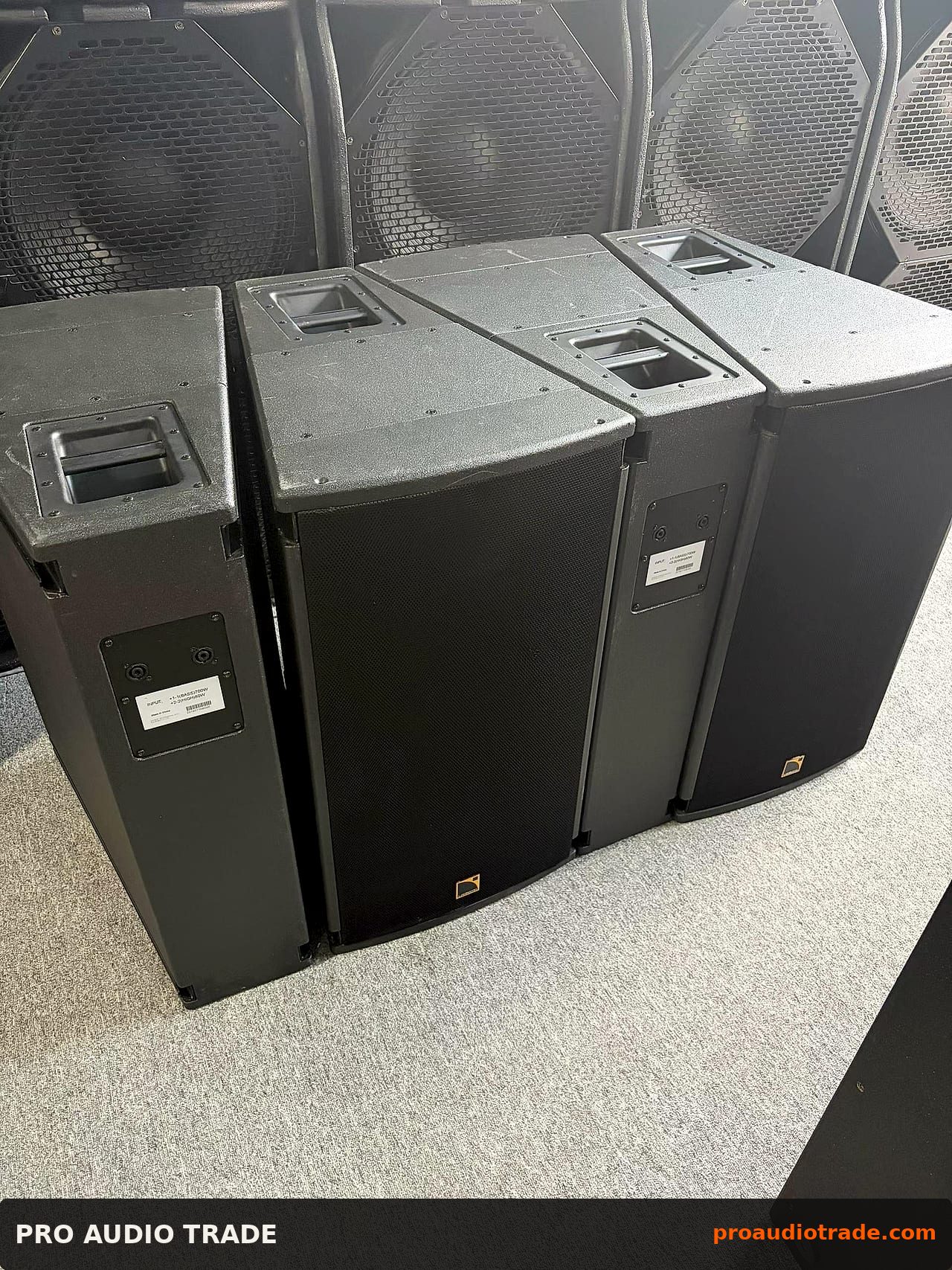
When you're sourcing used professional audio equipment for rental fleets, venue installs, or integration projects, you occasionally run into listings for gear that isn't a household name. The "Unidentified Unit-60947" is one such case—a model that appears in wholesale channels without a clear brand lineage. For B2B buyers in the CIS, Middle East, South America, and Africa, the question isn't just "what is it?" but "how does it compare to known alternatives, and is it worth the risk?" This guide breaks down where the Unit-60947 fits, what to inspect, and how to weigh it against more established options.
Where the Unidentified Unit-60947 fits in a rental or venue inventory
The Unit-60947 typically surfaces as a mid-tier signal processor or amplifier module—often described as a "universal" unit for PA systems. In rental inventories, it can serve as a backup or fill-in for branded DSPs or amp racks when budgets are tight. For venue installs, it might be considered for secondary zones or monitor sends where absolute brand prestige matters less than reliable performance. However, because it lacks a clear manufacturer identity, it's rarely a primary choice for front-of-house or critical monitoring. Instead, it's a pragmatic option for cost-sensitive projects, temporary setups, or expanding channel counts without stretching the capex. Integrators in emerging markets often pair it with known-brand speakers and mixers, using the Unit-60947 as a utility piece where its failure won't compromise the whole system.
Key specs that matter for integration work
When evaluating the Unit-60947 against alternatives like branded DSPs (e.g., dbx, BSS) or amp modules from Crown or QSC, focus on the specs that affect system integration. Check input/output connectivity: does it offer balanced XLR or Euroblock? Are there enough channels for your intended use? Look at processing latency and sample rate—if it's below 48 kHz or has high latency, it may not suit live sound. Power output and load handling are critical: verify RMS ratings at 4 and 8 ohms, and whether it supports bridged mode. Also, confirm the control interface: front-panel only, or does it have RS-232/Ethernet for remote control? For installs, the lack of network control can be a dealbreaker. Finally, check the power supply—universal 100-240V is a plus for international deployments. Compared to branded alternatives, the Unit-60947 may lack advanced features like Dante or preset recall, but if basic I/O and amplification are solid, it can still be a workhorse.
Used-buying checklist: what to inspect and what to ask the seller
Before committing to a used Unit-60947, request detailed photos of the front and rear panels, internal boards (if possible), and any serial labels. Ask the seller for a test report: have they verified all channels at rated power for at least 30 minutes? Pros check for common failure points: dried capacitors in the power supply, scratchy pots or encoders, and loose connectors. On the Unit-60947, pay attention to the output relays—they can stick after years of use. Ask if the unit has been serviced and whether the firmware (if applicable) is up to date. Request a guarantee that the unit passes signal on all channels without distortion. For B2B orders, ask for the grading scale: is it "tested working," "as-is," or "refurbished"? Get the seller to confirm the return policy and warranty period. Also, inquire about the history—was it used in a fixed install or on the road? Road-used units may have more cosmetic wear but could be more robust.
Price context and total cost of ownership
The Unit-60947 typically lists at 30-50% less than comparable branded used gear. For example, a used dbx DriveRack might fetch $400-600, while the Unit-60947 could be $200-300. But total cost of ownership includes more than the sticker price. Factor in potential repairs: if the unit fails, sourcing parts may be difficult due to its unidentified nature. That means you might need to replace it rather than fix it. Also consider downtime costs—if it's a backup unit, that's less critical, but if it's in a revenue-generating rental fleet, reliability matters. Freight and import duties can add 15-25% depending on your region. For B2B buyers in Africa or South America, shipping from CIS or Europe may involve longer lead times and customs clearance. Weigh these against the savings: if you're buying multiple units for non-critical applications, the Unit-60947 can be a budget-friendly way to expand capacity. But for mission-critical deployments, a branded alternative with available service documentation may be worth the premium.
How a B2B order works: grade, freight, MOQ
On wholesale marketplaces, the Unit-60947 is usually offered in grades: A (fully tested, minor cosmetic wear), B (tested working, visible scratches), or C (as-is, for parts). Always request the grade definition in writing. MOQs vary—some sellers require 5-10 units, others sell singles. For freight, confirm whether the seller handles export documentation and if they can palletize multiple units. Shipping to the Middle East or Africa often goes by air or sea; sea freight is cheaper for bulk but slower. Ask for Incoterms (FOB, CIF) to understand who pays for what. Payment terms may include escrow or letters of credit for first-time buyers. Also, check if the seller provides a test video of the specific unit you're buying—this is common for B2B transactions and reduces risk.
In summary, the Unidentified Unit-60947 is a viable budget alternative for non-critical audio applications, provided you inspect thoroughly and understand the trade-offs in support and parts availability. For rental firms and integrators in price-sensitive markets, it can fill gaps without breaking the bank—but always demand test reports and clear grading before you commit.