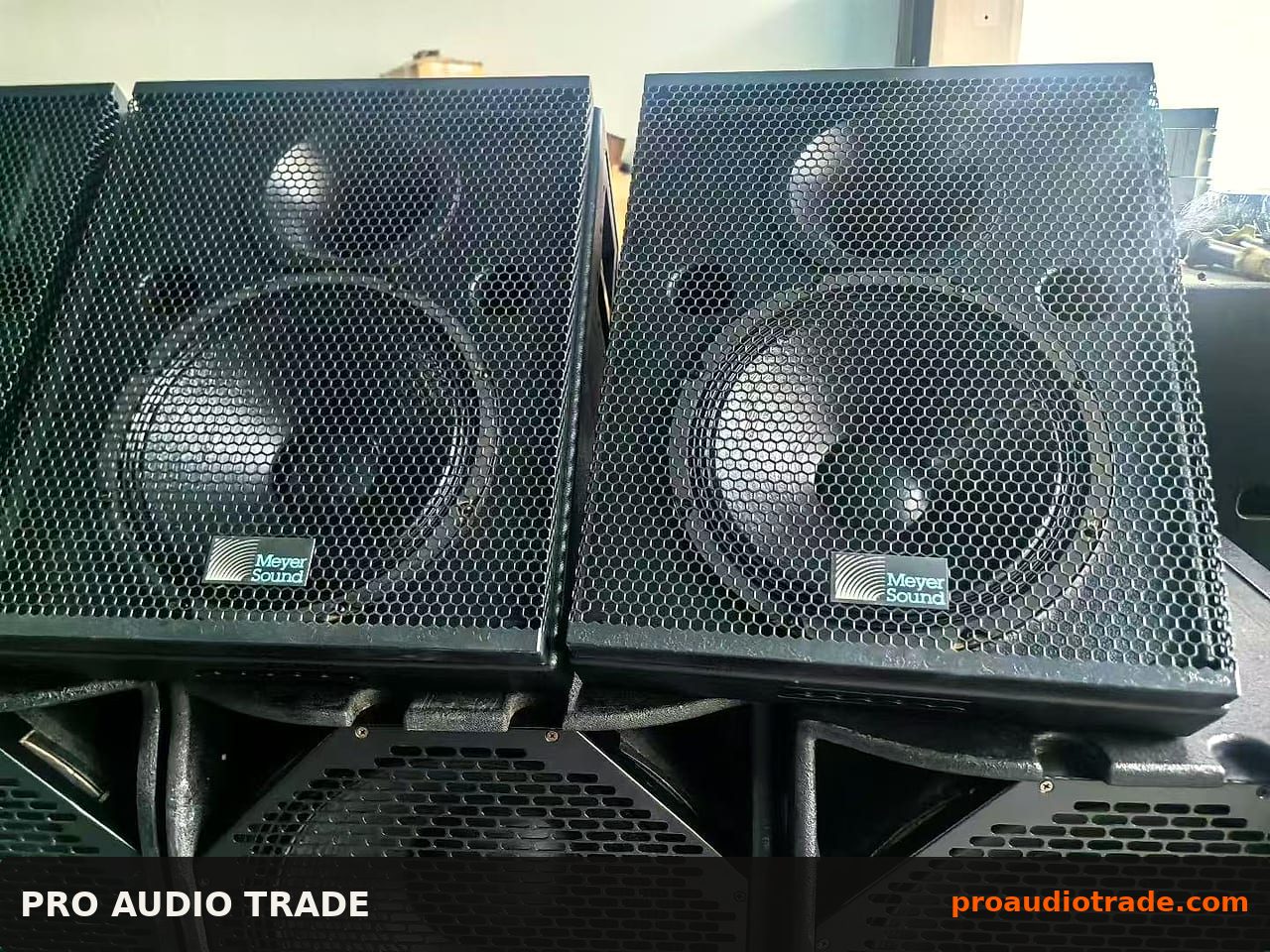
When you search for a used Meyer Sound UM-100P for sale, the listing usually says "excellent condition" and stops there. That tells you nothing. The UM-100P is a self-powered stage monitor with a 12-inch woofer and a 3-inch diaphragm compression driver, and its condition grade should be the single biggest factor in what you pay. A properly graded unit tells you whether the price is a bargain or a trap. Here's how to read grades, run powered tests, and separate cosmetic flaws from functional ones before you wire money to a seller in another country.
Grade A versus Grade B is not about looks—it's about service life remaining. In the trade, Grade A means the cabinet is structurally sound, the original drivers are intact, the amplifier module works on all inputs, and cosmetics show only light rack rash or minor scuffs. Grade B means it works but has visible wear: dented grille, chipped paint, a replaced woofer, or a noisy pot. The price gap between A and B on a UM-100P is typically 20–30%. If a seller can't tell you which grade they're selling, ask for photos of the woofer cone, the amp module heatsink, and the rear panel labels. A unit that has been on rental fleet duty for eight years will have thousands of hours on the amp—expect that to be reflected in the grade, not hidden behind the word "used."
Powered tests matter more than any cosmetic photo. The UM-100P is self-powered, so you need to hear it run before buying. Ask the seller for a video of the unit powered up with signal: confirm the limiter LED behaves normally, the woofer moves without rubbing or scraping, and the compression driver produces clean high frequencies without distortion. A common buyer question on r/livesound is: "How do I check a used powered speaker before buying?" The answer is to test each input separately, sweep the frequency range, and listen for cabinet buzz at high SPL. If the seller can't provide a powered test video, treat the unit as Grade C regardless of what the listing says. Compare that discipline to buying a used JBL SRX835P—same rule applies: no powered test, no premium price.
Cosmetic issues are negotiable; functional ones are not. Scratches, faded paint, and a missing logo badge are cosmetic and should knock maybe 5–10% off the price. A torn woofer surround, a dead HF driver, or a failed amp module is functional and can cost hundreds to fix—Meyer Sound service is not cheap, and spare boards for older UM-100P units are getting harder to source. Ask specifically: has the woofer ever been reconed? Was the amp module ever replaced? If the answer is yes, ask for the service invoice. A reconed unit with documentation can still be Grade B, but an undocumented recone is a red flag. The same logic applies when you look at a used JBL VTX A12—service history is worth more than a shiny cabinet.
Grading should set the price, not the other way around. A Grade A UM-100P with original drivers and a clean service history typically commands a premium over a Grade B unit with a replaced woofer, even if both pass a powered test. In the current market, a realistic Grade B unit might trade 25% below a Grade A example, and a Grade C unit—working but with known faults—should be priced as a project, not as a ready-to-tour monitor. Don't let a seller anchor you on the lowest price you've seen online; that listing was probably Grade C. Ask for the grade in writing, and make the invoice reflect it. If you're comparing across brands, the same grading discipline applies to a DONBN DW-12 or an Eminence 151351D—condition grade is the universal language of used gear.
Regional buyers need to factor voltage and import rules into the grade. The UM-100P is available in different mains configurations, so confirm the unit matches your local voltage—220–240V for CIS, Middle East, Africa, and South America is common, but 120V units exist and a step-up transformer adds cost and failure points. Ask for a photo of the rear panel voltage label. Also check CE/UL markings if your venue requires them, and budget for customs: import duty on used audio gear can run 10–20% depending on the country, plus freight. A Grade A unit that costs 15% more but ships from your region may be cheaper than a Grade B unit that needs a transformer and a customs broker. Get the grade, the voltage, and the landed cost in one conversation before you commit.
The practical takeaway: treat the grade as a contract, not a compliment. Ask for a powered test video, photos of the drivers and rear panel, and a written grade with the service history. A used Meyer Sound UM-100P for sale at a Grade A price should come with Grade A evidence—if it doesn't, negotiate down or walk away. That single habit will save you more money than any spec sheet.