The Meyer Sound UPM-1P remains a solid compact self-powered choice, but today's used market rewards buyers who track rental liquidations, voltage variants, and service history. Focus on Grade A units with 52-point bench tests and 90-day warranty, and weigh alternatives like the JBL SRX835P for higher SPL needs.
Start with the shift in rental demand. After a few soft seasons, rental firms in the CIS, Middle East, South America, and Africa are liquidating ex-fleet inventory to free up cash and storage. That means more used Meyer Sound UPM-1P pairs and line array elements hitting the market with documented service histories. The practical question buyers type into Google — "Is a used line array still worth it in 2026?" — has a nuanced answer: yes, if you verify transducer condition and rigging hardware, and no, if you need current network control or manufacturer warranty. Ex-rental gear often carries service records, which is a plus, but you must confirm the 52-point bench test and cosmetic vs functional grading before committing. For a compact install or monitor fill, a Grade A Meyer Sound UPM-1P pair with PowerCon and XLR connectors is a low-risk entry point; for higher SPL and app control, consider a JBL SRX835P at $1450 USD per unit, Grade A, stock 18, MOQ 4.
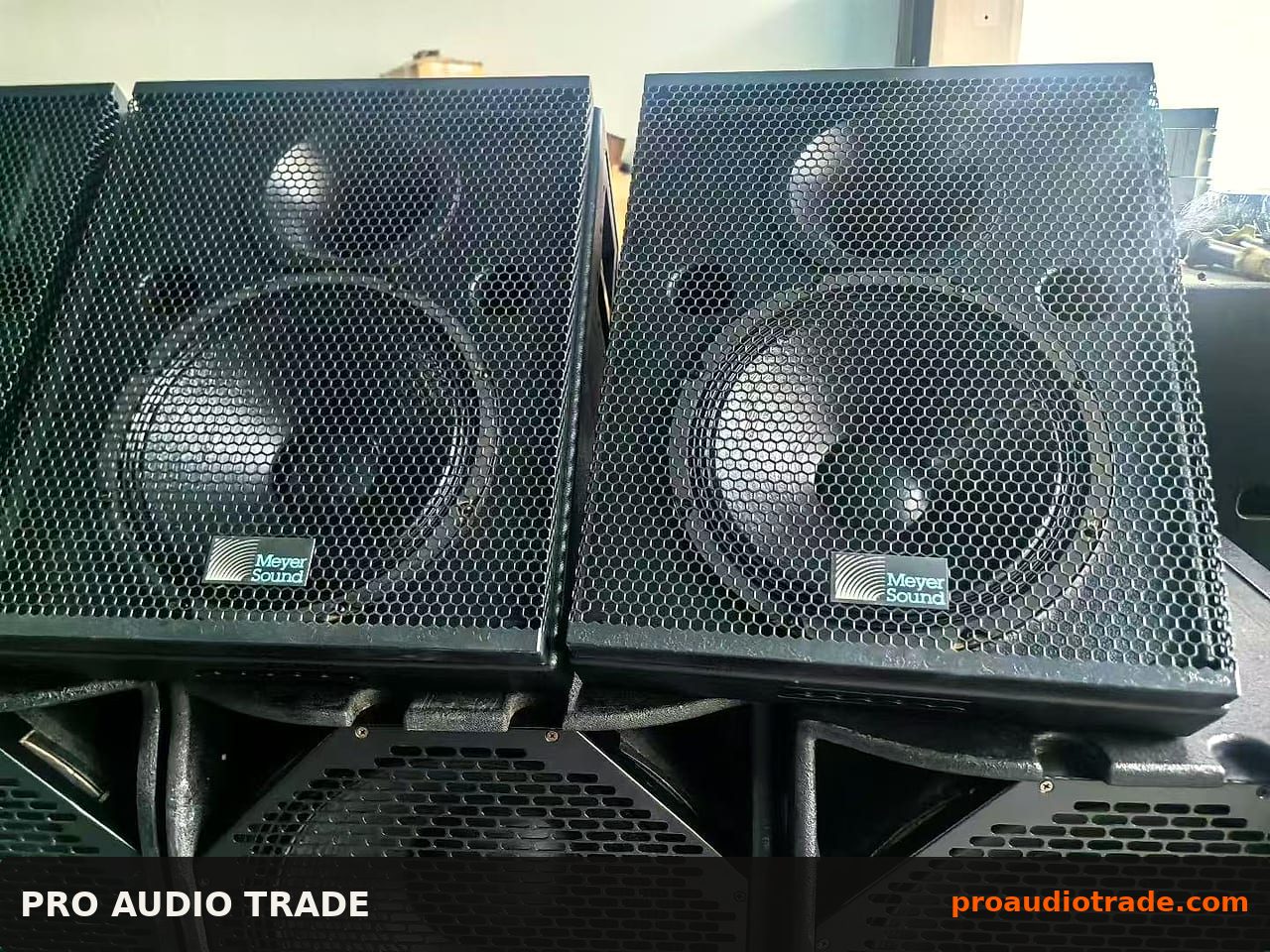
Digital consoles and line arrays are reshaping what buyers expect from used loudspeakers. The trend is toward self-powered boxes with onboard DSP and network control, which makes older analog-powered models like the UPM-1P attractive for budget-conscious integrators but less so for riders that specify current digital ecosystems. If your projects require line array coverage, the JBL VTX A12 — Grade B, 2017, $7400 USD, stock 16, MOQ 4 — offers 2 x 12 in LF and 120/90-degree coverage from a stadium rental fleet. That is a different tool from the UPM-1P, so compare use cases: UPM-1P for near-field and fill; VTX A12 for large-format arrays. Buyers on Reddit (r/livesound) often ask, "How do I check a used digital console before buying?" The same discipline applies to powered speakers: test every channel, confirm firmware and network modules, and check for service history. On the UPM-1P, inspect the rear amplifier modules and cooling fins for corrosion, and verify the honeycomb grilles are intact.
Wireless spectrum and voltage are the hidden cost drivers. In many target regions, 110/220V mains and CE/UL compliance determine whether a used unit is plug-and-play or needs a transformer and recertification. Always confirm the voltage label and connector type before purchase; a 110V UPM-1P in a 220V market is a service headache. Customs and duty for CIS, Middle East, South America, and Africa can add 10–30% to landed cost, so factor that into your comparison. This is where a side-by-side check pays off: a new UPM-1P pair might list at a premium, while a used Grade A pair from a rental liquidation can land at 40–60% of new cost, but add 90-day warranty coverage and 52-point bench testing as your risk buffer. Grade B units are fully functional with visible wear and typically cost 15–25% less than Grade A; Grade C units are functional but need service, so budget for recone or amplifier repair. For a 15-inch woofer alternative, the Eminence 151351D — Grade A, 8-ohm, RoHS compliant — is a service-part option when you need to recone or replace a driver rather than buy a whole cabinet.
Parts and service reality: Meyer Sound UPM-1P service is specialized, and spare boards or recone kits may be scarce for older revisions. Before buying, ask for the unit's year, service history, and whether the amplifier module has been recapped. For JBL VTX A12, rigging frames are available, which matters for rental firms. For JBL SRX835P, ex-install stock with low runtime and included poles and covers reduces immediate service risk. Buyers on LinkedIn AV procurement threads often ask, "What is the real cost of owning used line array?" The answer includes rigging inspection, transducer testing, and potential recertification — budget 10–15% of purchase price annually for maintenance on ex-rental gear. On our marketplace, every unit passes a 52-point bench test, and we grade cosmetic vs functional condition separately, so you know whether you are buying a Grade A near-mint unit or a Grade B workhorse.
Policy and regional fit: confirm CE/UL marks, mains voltage, and connector standards for your country. For CIS and Middle East, 220–240V is common; for South America, 110/220V varies by country; for Africa, both exist. Customs and duty rules differ, so request commercial invoices and HS codes upfront. A used Meyer Sound UPM-1P with PowerCon and XLR is straightforward, but check that the PowerCon cable matches your local plug. If you are buying multiple units, MOQ matters: UPM-1P stock 1, MOQ 1; JBL SRX835P stock 18, MOQ 4; JBL VTX A12 stock 16, MOQ 4. Plan shipping and duty before you commit, and use the 90-day warranty and returns on tested failures as your safety net. With 12,400+ units sold across 60+ countries, we see that buyers who verify voltage and service history upfront have far fewer post-sale surprises.
Closing takeaway: treat the used Meyer Sound UPM-1P as a compact, self-powered tool that shines when you verify condition, voltage, and service history. Compare it against alternatives by use case, not just price, and always factor in 90-day warranty, 52-point bench testing, and regional duty. If you need higher SPL or line array coverage, the JBL SRX835P and JBL VTX A12 are credible used-market options with clear stock and grading.