The best used power amplifier isn't the cheapest one — it's the one with the lowest total cost of ownership over three years. Purchase price, recone and repair risk, transport, insurance, and resale value decide the real number. Our ranking orders five proven amps by that math, not by sticker price.
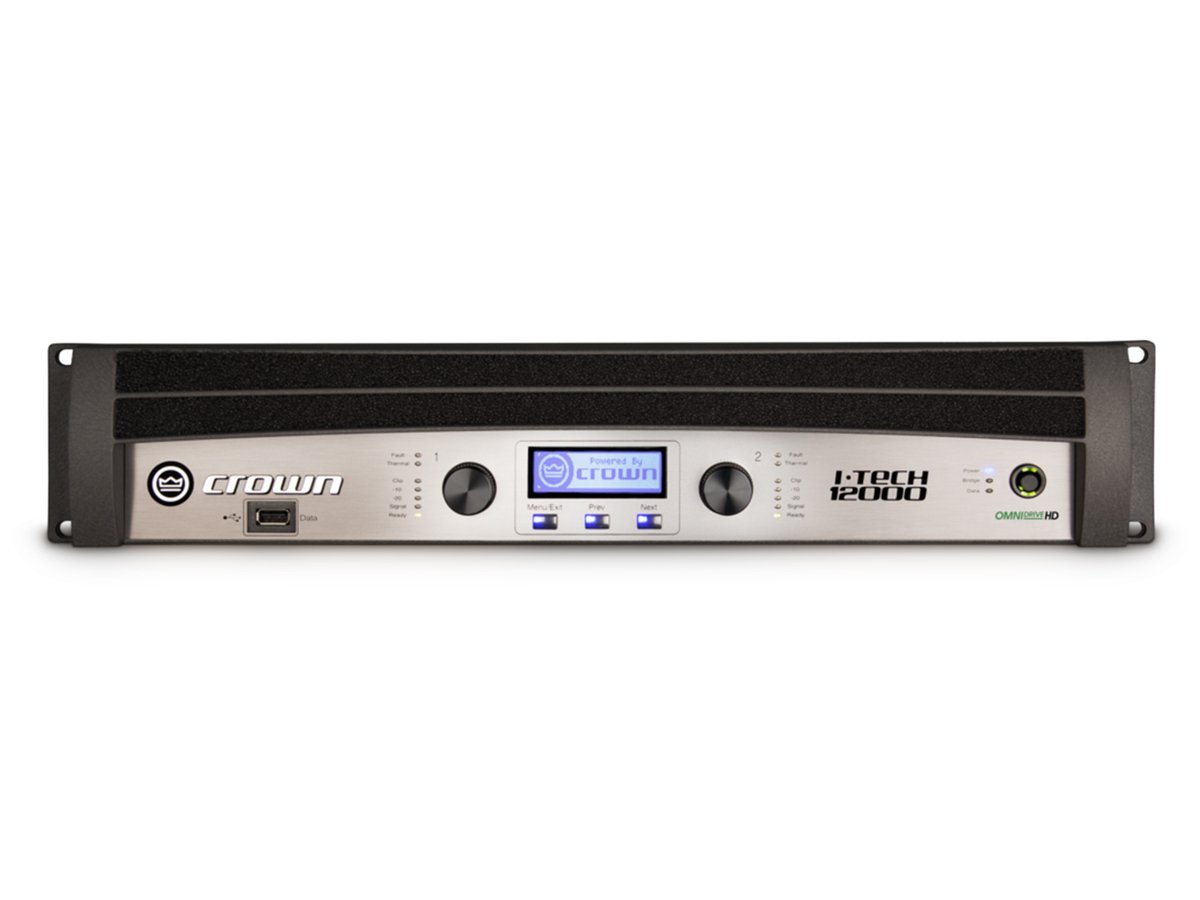
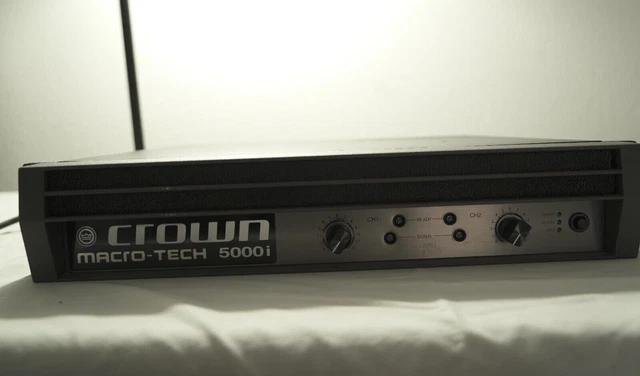
Start with purchase price, but don't stop there. A Crown I-Tech 12000HD at $4,950 (Grade A, 2019, 20 in stock, MOQ 2) looks expensive next to a Crown Macro-Tech 5000i at $1,650 (Grade B, 2014, 10 in stock). Run the numbers: the I-Tech's 2 x 4500 W at 4 ohms and OmniDrive HD DSP replace outboard processing, while the Macro-Tech's 2 x 2500 W at 2 ohms and 12.7 kg chassis mean fewer amp channels per rack. For a rental fleet, the I-Tech's network control cuts setup labor; for a fixed install, the Macro-Tech's Class AB+H topology is simpler to service. The $3,300 gap buys roughly two Macro-Techs — but only if you can absorb the higher failure risk of a 2014 unit.
Repair and recone costs are where used amps surprise buyers. A full recone on a touring amp typically runs 15–25% of the new driver cost, and output-stage service on a Class AB+H design like the Macro-Tech 5000i usually costs less than repairing a DSP-heavy network amp. That's why Grade matters: every unit here passes a 52-point bench test, but Grade A (near-mint, fully tested) units like the Crown I-Tech 12000HD and Lab.gruppen PLM 20K44 carry lower first-year service risk than Grade B or C. Ask for the service history — ex-rental units from venue refreshes often have it, and a load-banked output stage is worth more than a clean faceplate.
Transport and insurance scale with weight and channel count, and they're easy to underestimate. The Crown Macro-Tech 5000i at 12.7 kg ships cheaper per unit than a networked Lab.gruppen PLM 20K44, but the PLM's speakON, XLR, and RJ45 rear panel means one box replaces amp plus processor — fewer freight lines, lower insurance declared value per function. For CIS, Middle East, South America, and Africa, add customs and duty: typically 5–20% of declared value depending on country and HS code, plus mains voltage checks (110/220V) and CE/UL documentation. A $4,950 amp that arrives with the wrong connector or no CE mark costs more than the freight saved.
Here's the side-by-side that matters: new vs used. A new flagship touring amp in this class usually lists well above $8,000; the Crown I-Tech 12000HD at $4,950 Grade A saves roughly 35–40% upfront, and a 90-day warranty covers tested failures. Compare that to a Grade B Crown Macro-Tech 5000i at $1,650 — about 80% below new — but budget one service event in year one. Grade C units are cheaper still but need service before deployment. Resale tells the rest: Crown and Lab.gruppen hold value in rental markets, so a $4,950 I-Tech might resell at 50–60% after three years, while a $1,650 Macro-Tech may fetch 40–50%. The I-Tech's higher absolute resale often narrows the TCO gap to a few hundred dollars per channel.
Where does the rest of the ranking fit? The Aiqin Audio 300B (position 3) is a value play for buyers who need channels, not DSP — price on request, so request a proforma and compare landed cost. The Crest Audio Pro 8200 (position 4) suits installs where analog simplicity wins. The second Lab.gruppen PLM 20K44 (position 5) is listed separately because stock is 1 unit, MOQ 1 — a single-unit buy for a specific rack, not a fleet order. Across 12,400+ units sold to 60+ countries, the pattern holds: buyers who price repair, freight, duty, and resale before checkout end up with lower three-year cost than those who chase the lowest sticker.
Practical takeaway: build a simple TCO sheet — purchase price plus expected service (15–25% of driver cost for recone), freight and insurance per kg, duty at 5–20%, minus resale at 40–60%. Then buy the highest grade your budget allows, confirm voltage and CE/UL for your region, and use the 90-day warranty window to bench-test on arrival. That's how the best used power amplifier ranking actually pays off.