Skip to content
d&b audiotechnik Q7 1 / 2
d&b audiotechnik Q7 01d&b audiotechnik Q7 02

Used Line Arrays

d&b audiotechnik Q7

d&b audiotechnik · Q7

Price on request
Grade A In stock

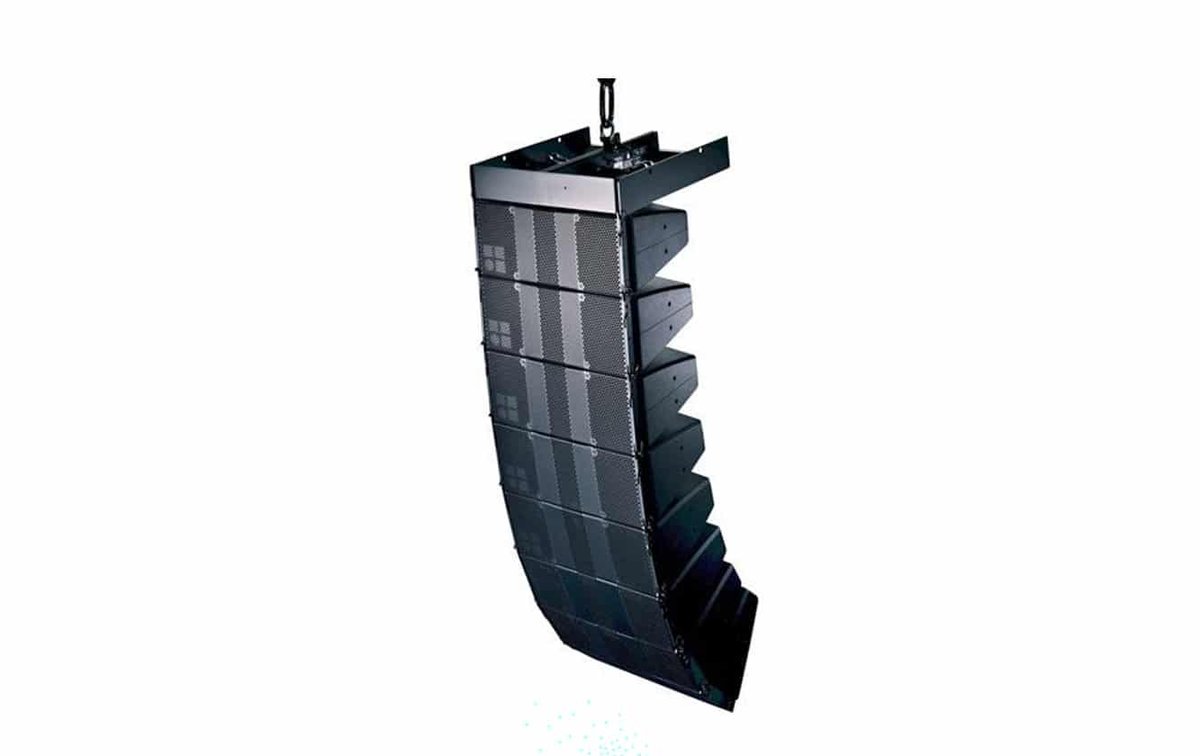
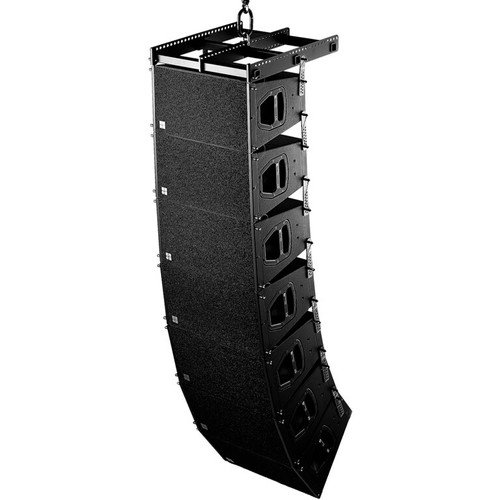
Compact 2-way line array elements from a regional touring stock. Factory service history, original flying frames and pins included.

Type
2-way line array
Connectors
NL4
Grille
Steel grille
Condition
A (used)
Included
Flying frame + pins
— Knowledge

Technical notes and buyer guidance

Used d&b audiotechnik Q7 for Sale: A Buyer's Review for Rental and Integration Pros

If you are sourcing line-array and point-source inventory for rental fleets, houses of worship, or corporate AV installs across the CIS, Middle East, South America, or Africa, a used d&b audiotechnik Q7 for sale is one of the most practical investments you can make. The Q7 is a compact, passive two-way loudspeaker from the Q-Series that delivers the vocal clarity and pattern control d&b is known for, without the amplifier and rigging overhead of a full line array. For buyers who need consistent coverage in mid-sized venues, ballrooms, and outdoor stages, the Q7 remains a workhorse that holds resale value and integrates with existing d&b infrastructure.

Key specs to keep in mind when comparing listings: the Q7 uses a 1.4-inch HF compression driver on a rotatable CD horn and a single 10-inch LF driver, with a nominal impedance of 16 ohms and power handling of 400 W RMS / 1600 W peak. The dispersion is 75° horizontal by 40° vertical (rotatable), and the cabinet is a bass-reflex design with a frequency response of 60 Hz–17 kHz. It is passive, so it requires a d&b D20, D80, or D12 amplifier with the correct Q7 preset. In fixed ranking order for used-market value, the Q7 sits above the Q10 (more output and lower extension) but below the V8 (higher SPL and larger venues); compared with the Y7P, the Q7 offers tighter pattern control for shorter throw. For buyers prioritizing portability and d&b ecosystem compatibility, the Q7 is the top pick in its class.

What to inspect before you commit: first, check the HF diaphragm and horn for physical damage or signs of replacement, since compression drivers are the most common failure point. Second, verify the LF cone and surround for fatigue, and listen for rub or distortion at moderate levels. Third, inspect the cabinet for water damage, deep gouges, and rigging insert wear—especially the M10 threaded points and the optional rigging frame. Fourth, confirm the serial number and ask for a service history; d&b authorized service records add real value. Finally, test the speaker with a known-good D20 or D80 amplifier and the correct preset to ensure the drivers are matched and the crossover is functioning.

d&b audiotechnik Q7 Price Used: What Buyers Actually Pay and How to Evaluate a Unit

When you search for a used d&b audiotechnik Q7, you are not just hunting a number—you are pricing a proven point-source loudspeaker that still holds strong rider acceptance in rental fleets, houses of worship, and corporate AV across the CIS, Middle East, South America, and Africa. The Q7's 75° x 40° dispersion and 133 dB max SPL make it a versatile tool for mid-throw FOH and monitor duty, and because d&b supports the Q-Series with long-term service and spare parts, used units remain a smart CAPEX play. Expect asking prices to vary widely based on condition, age, and whether the cabinet comes with a valid d&b warranty transfer or service history.

In the current secondary market, a single used Q7 typically trades in the range of USD 2,800–4,200 depending on region and cosmetics, while a matched pair with rigging hardware and covers can push toward USD 7,500–9,000. Compare that to a new Q7 list price (often above USD 6,000 per cabinet) and the value case is clear—but only if the drivers and network electronics are healthy. Rank your shortlist by: 1) verified driver originality (d&b OEM cones and diaphragms), 2) amplifier compatibility (D20/D80 with correct firmware and presets), 3) cosmetic and rigging integrity, 4) documented service history, and 5) seller reputation. A cheap Q7 with mismatched drivers is rarely a bargain once you factor in a recone kit and labor.

Inspection is where deals are won or lost. Ask for close-up photos of each driver cone and dust cap for signs of fatigue or aftermarket replacement, check the cabinet for water damage or swollen plywood at the base and handle recesses, and confirm the Speakon NL4 connectors are tight and uncracked. Power up the unit on a known-good d&b amplifier and run a sweep to listen for rub, buzz, or excessive compression at high SPL. Verify the serial number against d&b's service records if the seller allows, and insist on seeing the rigging points and flyware for elongation or missing pins. For buyers in dusty or humid climates, pay extra attention to corrosion on the input panel and grille.

d&b audiotechnik Q7 vs Alternatives: A Buyer’s Guide for Used Professional Audio Gear

When you’re sourcing used professional audio gear for rental fleets, integrators, or touring systems across the CIS, Middle East, South America, or Africa, the d&b audiotechnik Q7 often comes up as a benchmark for compact, high-output line-array and point-source hybrid solutions. Its reputation for rider acceptance, long-term reliability, and d&b’s system approach makes it a strong candidate—but is it always the best value on the secondary market? This comparison breaks down the Q7 against three common alternatives you’ll find in wholesale channels: the L-Acoustics Kiva, the Meyer Sound M’elodie, and the Nexo GEO S12. We’ll look at real buyer considerations—specs, availability, support, and total cost of ownership—so you can make an informed decision for your inventory or project.

Key specs and fixed ranking order (based on typical used-market availability, rider friendliness, and system scalability for B2B buyers): 1) d&b Q7 – 75° x 40° dispersion, 2 x 10” LF + 1.4” HF, max SPL 139 dB, lightweight (approx. 26 kg), and fully compatible with d&b D20/D80 amplifiers and R1 remote control. 2) L-Acoustics Kiva – 100° x 15° (or 110° x 15° depending on version), 2 x 6.5” LF + 1.75” HF, max SPL 138 dB, very compact but requires LA4X/LA8 amps and often pairs with SB15M subs. 3) Meyer Sound M’elodie – 100° x 40°, 2 x 8” LF + 1.4” HF, max SPL 136 dB, self-powered with onboard amplification, which simplifies cabling but adds weight and potential service complexity. 4) Nexo GEO S12 – 120° x 20° (or 5° depending on config), 1 x 12” LF + 1 x 3” HF, max SPL 139 dB, modular and scalable, but needs NXAMP and specific rigging. The Q7 stands out for its balanced pattern control and d&b’s consistent amp presets, while Kiva wins on compactness, M’elodie on self-powered simplicity, and GEO S12 on horizontal coverage flexibility.

What to inspect when buying used: First, verify the driver cones and diaphragms for fatigue or reconing—Q7s are often used in rental fleets and may have had hard lives. Check the rigging hardware for bent pins, worn threads, or missing quick-lock fittings, as replacement parts can be costly and lead times long in some regions. Test each cabinet with a known-good d&b amplifier (D20 or D80) to confirm presets load correctly and there are no error codes. For self-powered alternatives like the M’elodie, ask for service history and check the onboard amp modules for overheating signs or firmware mismatches. Also confirm the serial numbers are not reported stolen and that the seller can provide original documentation or service records—especially important for cross-border deals in the CIS and Africa where customs may ask for proof of origin.